Can you officiate basketball without formal training? While some basic familiarity with the game is a start, becoming a competent basketball official requires dedicated training in basketball officiating rules and basketball officiating mechanics. This comprehensive guide will equip you with the knowledge and skills needed to confidently call games, from understanding fundamental rules to mastering court positioning and basketball game management.
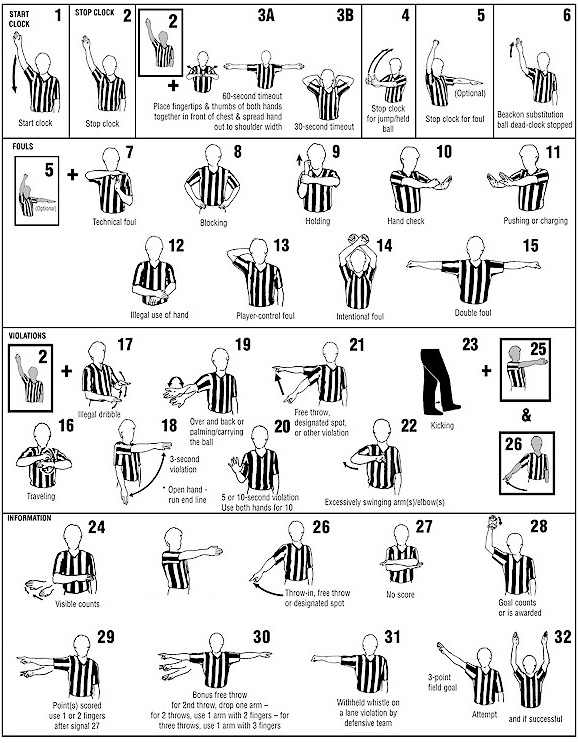
Image Source: basilioeduc.wordpress.com
The Heart of the Game: Essential Basketball Rules
Officiating basketball is about ensuring fair play and the smooth progression of the game according to established rules. Understanding these principles is paramount for any aspiring official.
Player Movement and Violations
Several key basketball violations govern how players can move with the ball and interact on the court.
Traveling
What is a travel call in basketball? A travel call is made when a player holding the ball takes too many steps without dribbling. This typically occurs when a player picks up their dribble and then takes more than the allowed number of steps (usually one and a half steps for a pivot foot, or two steps after receiving a pass while in motion).
- Gather Step: Officials must recognize the “gather” step, where a player can take an extra step as they receive the ball or end their dribble. This is a common point of confusion for new officials.
- Pivot Foot: Once a player establishes a pivot foot, they cannot lift it and put it back down before starting a dribble or passing/shooting.
- Two Steps: After receiving a pass while stationary, a player can take two steps. If they are in motion when receiving the ball, the initial contact with the ball can be considered the start of their “gather,” allowing for two additional steps.
Dribbling Violations
- Double Dribble: A player cannot dribble the ball, stop dribbling, and then dribble again.
- Carrying/Palming: The ball cannot be dribbled by rolling it on the hand or by the hand being below the ball. The palm of the hand should not come into contact with the ball during the dribble.
Other Common Violations
- Out of Bounds: The ball or the player in possession of the ball touching the boundary lines or the area beyond them.
- Backcourt Violation: Once the ball has been advanced into the frontcourt, it cannot be passed or dribbled back into the backcourt by the offensive team.
- Shot Clock Violation: The offensive team must attempt a shot that hits the rim within the allotted time (e.g., 24 seconds in professional basketball).
- Five-Second Violations: This applies to closely guarded players holding the ball without dribbling, passing, or shooting, or to inbound passes.
- Three-Second Violation: Offensive players cannot remain in the opponent’s restricted area (the “key” or “paint”) for more than three seconds.
Understanding Fouls
Fouls are infringements of the rules that involve illegal personal contact. Basketball foul calls are a critical aspect of officiating.
Personal Fouls
These are committed by players against opponents.
- Blocking: Impeding the progress of an opponent by contact without establishing legal guarding position.
- Charging: An offensive player with the ball deliberately driving into a stationary defender who has established legal guarding position.
- Holding: Impeding the progress of an opponent by grasping or reaching.
- Pushing: Forcibly moving an opponent away.
- Illegal Use of Hands: Contact with an opponent that is not incidental and affects their ability to play the ball or move. This includes reaching in, batting the ball away from a dribbler, or making contact with the shooter’s arm.
Technical Fouls
These are non-physical violations or unsportsmanlike conduct.
- Unsportsmanlike Conduct: Arguing with officials, taunting opponents, excessive celebration, disrespectful behavior.
- Delay of Game: Intentionally stopping the game, such as by knocking the ball out of bounds.
- Illegal Substitution: Entering the game without being beckoned by an official.
- Too Many Players on the Court: Having more than five players on the court during play.
Flagrant Fouls
These are personal fouls that involve excessive or violent contact.
- Flagrant Foul 1: Unnecessary contact.
- Flagrant Foul 2: Unnecessary and excessive contact, resulting in immediate ejection of the offender.
Shooting Fouls
When a foul is committed against a player who is in the act of shooting.
- In the Act of Shooting: This includes the motion of the shot itself, even after the ball has been released.
- Foul on Shooter: If a foul occurs before or during the shooting motion, the shooter is awarded free throws. Two free throws are awarded if the shot is missed, and one free throw is awarded if the shot is made.
Mastering Basketball Officiating Mechanics and Positioning
Effective basketball officiating mechanics involve precise movements, clear communication, and optimal basketball court positioning to see plays clearly and make accurate calls.
The Referee’s Role and Responsibilities
Referees are the guardians of the game, responsible for enforcing rules, ensuring player safety, and maintaining the flow of the game.
- Pre-Game Duties: Arriving early, checking equipment, meeting with coaches, discussing game management strategies.
- During the Game: Calling violations and fouls, administering the game clock and shot clock, ensuring proper player substitutions, communicating with partners.
- Post-Game Duties: Completing game reports, providing feedback, maintaining professionalism.
Court Positioning for Officials
Proper positioning allows officials to observe all aspects of the game effectively. Different positions are required for different phases of play.
Two-Official System
In a two-official system, referees typically work in a diagonal or mirrored position.
- Trail Official: This official is behind the play and responsible for the majority of the calls in the area they are covering. They typically observe the ball and players moving away from them.
- Lead Official: This official is ahead of the play and responsible for observing action near the basket, inbound passes, and plays developing towards them.
Three-Official System
A three-official system provides better coverage, especially in faster-paced games.
- Center Official: This official typically starts in the middle of the court and moves with the ball, taking primary responsibility for plays in their zone.
- Trail Official: Similar to the two-official system, this official is behind the play.
- Lead Official: This official is positioned near the end line, focusing on plays at the basket and inbound situations.
Key Mechanics for Officials
- Whistle: A sharp, clear whistle is crucial for signaling stoppages. The sound should be distinct and consistent.
- Signals: Basketball referee signals are a universal language used to communicate calls to players, coaches, and spectators. Knowing and executing these signals correctly is vital.
- Stop Clock: Pointing the index finger upwards.
- Foul: Clenching the fist and raising it.
- Violation: Open hand raised with palm facing the referee.
- Traveling: Rotating the hand.
- Double Dribble: Alternating slapping the thigh with open hands.
- Shot Clock Violation: Holding up the number of seconds remaining.
- Basket Interference: Pushing the ball up.
- Goal Counts: Raising the number of fingers for the points awarded.
- Handing the Ball: Proper technique for handing the ball to players for inbound passes or after a stoppage.
- Footwork: Efficient movement patterns that allow officials to stay with the play and maintain proper positioning without interfering with players. This includes shuffling, mirroring, and closing space.
- Eyes: Keeping your head on a swivel and your eyes on the ball and the players. Avoid tunnel vision.
Effective Basketball Game Management
Beyond the rules, basketball game management encompasses the overall control and flow of the game, ensuring a positive and competitive environment.
Communication is Key
Effective communication between officiating partners and with players and coaches is essential for a well-officiated game.
Referee-to-Referee Communication
- Visual Cues: Using eye contact, head nods, and hand signals to acknowledge calls or indicate responsibility.
- Verbal Cues: Brief, clear verbal communication for specific situations (e.g., “holding,” “charging”).
Referee-to-Player/Coach Communication
- Professional Demeanor: Maintaining a calm, respectful, and authoritative presence.
- Brief Explanations: Providing concise explanations for calls when necessary, but avoiding lengthy debates.
- Establishing Boundaries: Setting clear expectations for conduct from the beginning of the game.
Handling Different Game Situations
- Close Games: Maintaining composure and focus when the score is tight.
- Physical Play: Being prepared for increased contact and ensuring calls are consistent.
- Blowouts: Maintaining professionalism and not letting the score dictate officiating standards.
- Overtime: Staying sharp and focused during extended play.
The Importance of Basketball Training
Consistent basketball training is not just for players; it’s crucial for officials too.
- Rule Clinics: Attending regular sessions to stay updated on rule changes and interpretations.
- Mechanics Training: Practicing and refining footwork, signaling, and positioning.
- Scouting and Mentorship: Observing experienced officials and receiving feedback from mentors.
- Physical Fitness: Maintaining good cardiovascular health and agility to keep up with the pace of the game.
Interpreting Specific Rules and Scenarios
Deciphering complex basketball rules requires careful observation and a thorough grasp of the intent behind them.
The Art of the Charge vs. Block
This is one of the most challenging calls for officials.
- Legal Guarding Position: A defender must establish position before the offensive player initiates contact. The defender’s feet must be shoulder-width apart, and they must be facing the offensive player.
- Verticality: Defenders have the right to occupy space. Contact that occurs when a defender is in a legal guarding position with arms extended vertically is typically not a foul.
- Momentum: If the offensive player initiates contact by driving into a stationary defender, it’s likely a charge. If the defender moves into the path of the dribbler, it’s likely a block.
Dealing with Contact During the Shot
- Shooter’s Rhythm: Officials must be aware of a shooter’s rhythm and not penalize them for legitimate contact that does not affect the shot.
- Hand Contact: Contact with the shooter’s shooting arm or hand is usually a foul. Contact with the shooter’s body that is incidental to the defensive play may not be a foul.
- “Contest” vs. “Foul”: Differentiating between a defender legally contesting a shot and committing a foul.
Player Control and Possession
Grasping when a player has control of the ball is fundamental.
- Establishing Control: A player is considered to have control of the ball when they are holding it or dribbling it.
- Loose Balls: On loose balls, officials look for illegal contact that impedes an opponent’s opportunity to gain possession.
FAQ Section
Here are some frequently asked questions about officiating basketball:
Q1: What are the most common mistakes new basketball officials make?
New officials often struggle with inconsistent foul calls, poor court positioning leading to missed calls, and difficulty in distinguishing between a charge and a block. They may also over-officiate or under-officiate certain aspects of the game.
Q2: How important is physical fitness for basketball officials?
Physical fitness is extremely important. Officials need to be able to move effectively on the court, maintain proper positioning, and stay alert throughout the entire game, which can last for over two hours. Good stamina and agility are essential.
Q3: Can I officiate basketball at a professional level without attending basketball training programs?
While some individuals might have exceptional natural talent and experience, formal basketball training is highly recommended and often required for officiating at higher levels. Training programs provide structured learning of rules, mechanics, and game management strategies.
Q4: How do I handle a situation where coaches or players are arguing excessively?
Maintain a calm and professional demeanor. Listen briefly, provide a concise explanation if necessary, and then clearly state that the discussion is over. If the behavior continues, utilize technical fouls to address unsportsmanlike conduct and ensure basketball game management remains effective.
Q5: What is the difference between a 3-person and 2-person officiating crew in terms of responsibilities?
In a 3-person crew, responsibilities are more specialized, with each official covering a specific zone. This allows for better coverage, especially around the basket and during transition plays. In a 2-person crew, officials often work in a mirrored or diagonal fashion, with each official taking primary responsibility for the players in their assigned areas.
Q6: How should I signal a basketball travel call?
To signal a travel call, hold your arms out in front of you and rotate your wrists back and forth, as if you are running in place. This distinctive signal clearly communicates the violation.
Q7: What is the most critical aspect of basketball officiating mechanics?
The most critical aspect is maintaining proper basketball court positioning. Without being in the right place, it’s impossible to see the play develop and make accurate basketball foul calls or basketball violations. Efficient footwork and staying “with the play” are paramount.
By dedicating yourself to learning the basketball officiating rules, mastering basketball officiating mechanics, and prioritizing effective basketball game management, you can embark on a rewarding journey as a basketball official. Continuous basketball training and a passion for the game will set you on the path to success.