Want to know how to play 21 in basketball? 21 is a popular basketball game where players try to be the first to score 21 points. It’s a fantastic way to practice your shooting and develop key basketball skills. This guide will walk you through everything you need to know to master this exciting game.
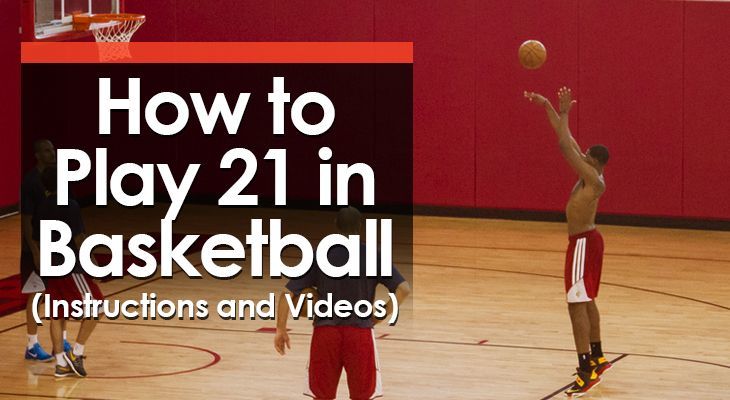
Image Source: www.basketballforcoaches.com
The Basics of 21 Basketball
21 is a shooting game played by two or more people. The main goal is to be the first player to reach 21 points. This game is excellent for improving shooting accuracy, consistency, and even your understanding of basic basketball rules and gameplay. It’s a fun way to learn how to play basketball from the ground up.
What is 21 in Basketball?
21 in basketball is a shooting game where players take turns shooting from different spots on the court. Players score points for making shots. If a player misses, they can often get another chance if the ball is rebounded by another player. The first player to reach exactly 21 points wins.
Essential Basketball Fundamentals
Before diving into 21, it’s good to have a grasp of basketball fundamentals. These include:
- Dribbling: Keeping control of the ball while moving.
- Passing: Throwing the ball accurately to a teammate (though less critical in 21, it’s a core skill).
- Shooting: Getting the ball into the hoop. This is the main focus of 21.
- Rebounding: Getting the ball after a missed shot. This is crucial in 21 for second chances.
- Defense: Preventing the other team from scoring (again, less direct in 21 but good to know).
Basketball Scoring in 21
Scoring in 21 is straightforward, but there are a few common variations:
- Free Throws: Usually worth 1 point.
- Field Goals (Inside the three-point line): Usually worth 2 points.
- Three-Point Field Goals: Usually worth 3 points.
The exact point values can sometimes be adjusted based on house rules, but these are the standard.
How to Play 21: Step-by-Step
Playing 21 involves a clear progression through different shooting spots. Here’s a breakdown of the typical gameplay.
Setting Up the Game
- Players: You need at least two players. Three or four is ideal for more dynamic play and rebounding action.
- Court: Any basketball court will do, from a full court to a half-court.
- Ball: A standard basketball.
The Shooting Order
The player who wins a coin toss or rock-paper-scissors usually goes first. The shooting order then follows clockwise or counter-clockwise.
The Shooting Spots
Players typically move around the court, taking shots from designated spots. A common progression is:
- Spot 1: Free Throw Line: The first shot is usually from the free-throw line.
- Spot 2: Elbows of the Key: Shots are taken from the area just outside the paint, near the free-throw line extended.
- Spot 3: Wings: Shots are taken from the side of the court, about halfway between the free-throw line and the baseline.
- Spot 4: Three-Point Line: Players then move to the three-point line.
You can adapt these spots or create your own sequence.
Gameplay Mechanics
- Taking Turns: Each player gets one shot from their designated spot.
- Making a Shot: If a player makes their shot, they score the corresponding points.
- Missing a Shot: If a player misses, they typically don’t score.
- Rebounding: This is where 21 gets interesting!
- If a player misses, the ball is “live.”
- Any player can try to rebound the ball.
- If a player (other than the shooter) rebounds the ball, they can immediately attempt a shot from where they caught it.
- If they make the shot, they score the points.
- If they miss, the ball becomes dead, and the next shooter in line takes their turn from the original spot.
Scoring and Progression
- Individual Scores: Each player keeps track of their own score.
- Advancing to the Next Spot: A player must successfully make a shot from their current spot to advance to the next shooting spot. If they miss their shot, and the ball goes out of bounds or is secured by another player who doesn’t make a shot, they stay at that spot for their next turn.
- The “Go Back to Zero” Rule: This is a crucial rule that adds a challenge. If a player misses their shot and no one rebounds the ball, or if the ball goes out of bounds, that player might have to go back to zero points or move back to an earlier spot, depending on the agreed-upon rules. This prevents players from simply taking easy shots.
Key Basketball Strategies for 21
While 21 is largely about shooting, a few strategies can help you win.
Shooting Techniques
- Consistent Form: Focus on your shooting form – B.E.E.F. (Balance, Eyes, Elbow, Follow-through) is a great way to remember the basics.
- Arc: Ensure your shot has a good arc. This makes it easier to go in.
- Follow-Through: Always follow through with your shooting hand towards the basket.
Rebounding Smart
- Positioning: When you anticipate a miss, get in a good rebounding position. Box out opponents to secure the rebound.
- Quick Second Chance: If you grab a rebound, quickly assess if you can make a shot from where you are.
Knowing When to Be Aggressive
- Taking Advantage of Opportunities: If you get a rebound, don’t hesitate to take a shot if you’re in a good position.
- Patience: On your turn, don’t rush your shot. Take a moment to set yourself up.
Adapting to Different Spots
- Range: Practice shooting from all the designated spots. Your range will improve with practice.
- Angles: Learn how to shoot effectively from different angles.
Variations of 21 Basketball
There are many ways to play 21, making it a versatile game. Here are a few common variations:
Standard 21
As described above, with players moving through spots and scoring points.
Team 21
In this version, two teams play against each other. One player from each team shoots at a time. If one team makes a shot, they get points. If the other team misses, the ball is live for anyone to rebound. Scoring can be cumulative for the team.
Three-Point 21
This variation focuses solely on three-point shots. Players start at the three-point line and must make a three-pointer to advance to another spot along the arc.
“Bust” Rules
Some versions include a “bust” rule. If you score points that take your total over 21, you might “bust” and lose all your points, having to start again from zero. This adds a significant element of risk management.
Shooting Order Variations
- Continuous Play: Instead of strict turns, the ball is always live. Anyone can grab a rebound and shoot. The player who makes the shot then gets to call the next shot location.
- Spot Rotation: Players might be assigned specific spots and only shoot from those locations until they make a shot.
Practicing 21: Drills and Skills
Playing 21 is itself a fantastic drill, but here are some ways to improve your basketball skills specifically for this game.
Shooting Drills
- Form Shooting: Dedicate time to shooting close to the basket with perfect form.
- Mid-Range Mastery: Practice shots from the elbows and wings. Focus on making 5-10 shots in a row from each spot before moving.
- Three-Point Practice: Spend time shooting threes from various spots around the arc.
- Free Throw Routine: Develop a consistent free-throw routine. Making free throws is often the fastest way to earn points in 21.
Rebounding Drills
- Tip Drills: Practice tipping the ball to yourself to gain control.
- Boxing Out: Work on sealing off opponents to get rebounds.
Game Simulation Drills
- Progressive Shooting: Start at the free-throw line and make shots to progress to the next spot. If you miss, restart that spot.
- Rebound and Shoot: Have a friend (or even a wall) rebound missed shots and pass them back to you for a quick second chance.
Basketball Positions and 21
While 21 isn’t tied to specific basketball positions in the way a full game is, certain skills associated with positions can be beneficial.
- Guards: Typically good shooters and ball-handlers, they excel at the perimeter shots in 21.
- Forwards: Often strong rebounders and capable shooters, they can be effective at securing rebounds and making shots from closer or mid-range.
- Centers: While usually focused on playing near the basket, their rebounding strength is an asset in 21. They can also develop their outside shooting through this game.
Every player, regardless of their typical basketball position, can improve their shooting and learn the game better by playing 21.
Frequently Asked Questions About 21 Basketball
Here are some common questions people have about playing 21:
Q1: How many players can play 21?
A1: 21 can be played with as few as two players, but three or four players often make the game more dynamic with more rebounding action.
Q2: What happens if I score more than 21 points?
A2: This depends on the specific rules you’re playing with. Many variations have a “bust” rule where scoring more than 21 points means you lose all your points and have to start over from zero. Other times, you might just stay at 21, or a specific penalty might apply. Always agree on the rules before you start.
Q3: Can I rebound my own missed shot?
A3: Generally, no. In most versions of 21, you can only rebound your own shot if another player touches it first. This rule encourages interaction and competition for rebounds.
Q4: What are the most common shooting spots in 21?
A4: The most common spots are the free-throw line, the elbows of the key, the wings, and the three-point line. The exact order and number of spots can be customized.
Q5: Is there a way to “steal” points from other players?
A5: Not directly, but if you rebound a missed shot and make it, you effectively “steal” the opportunity to score from the player who missed. This is a key part of the game’s competitive nature.
Q6: How important is rebounding in 21?
A6: Rebounding is extremely important! It gives you a second chance to score and can prevent your opponents from getting an easy rebound and putting the ball back in. Good rebounding skills can often compensate for slightly less accurate shooting.
Q7: Can I use different point values for shots?
A7: Absolutely. While the standard is 1 for free throws, 2 for inside the arc, and 3 for outside, you and your friends can agree on any point values you like to make the game more challenging or fun.
Playing 21 is a fantastic way to hone your basketball skills and enjoy the game. By focusing on fundamentals, practicing diligently, and employing smart strategies, you can master this popular shooting game. So grab a ball, find some friends, and hit the court!