The official NBA hoop height is 10 feet (3.05 meters) from the floor to the top of the rim. This standard has been in place for decades and is a fundamental aspect of the game.
Basketball, a sport enjoyed by millions worldwide, has precise dimensions that define its play. Central to these dimensions is the height of the basketball rim. For many fans and aspiring players, a fundamental question arises: how tall is the basketball rim in the NBA? The answer is a definitive 10 feet, a seemingly simple measurement that profoundly impacts the game’s strategy, skill, and excitement. This seemingly small detail, the NBA hoop height, is meticulously maintained across all professional arenas, ensuring a consistent challenge for every player.
The basketball standard height for the rim is not arbitrary. It’s a carefully chosen figure that strikes a balance, demanding athleticism and skill without making the game unattainable. This regulation basketball hoop height is crucial for maintaining the integrity and competitive nature of professional basketball. While other leagues, like FIBA, might have slight variations in their basketball court dimensions or ball specifications, the NBA rim measurements remain constant, creating a familiar and predictable environment for players and fans alike. Let’s delve deeper into this pivotal measurement and its implications.
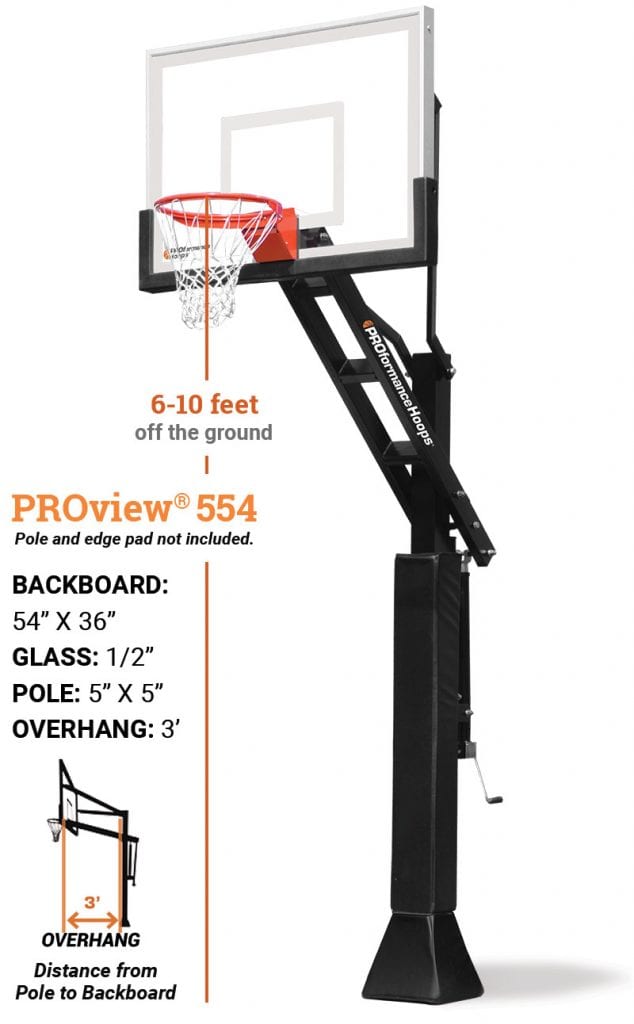
Image Source: superiorplay.com
The Golden Standard: 10 Feet
The NBA rim measurements are set at a precise 10 feet. This height has been the standard for the professional league since its early days. This means that from the polished wooden surface of the court to the very top edge of the steel ring, the distance is exactly 120 inches or 3.05 meters. This regulation basket height is a cornerstone of the sport, influencing everything from shooting technique to defensive strategies.
Historical Context of the NBA Hoop Height
The evolution of basketball saw the rim height established relatively early on. When the sport was invented by James Naismith in 1891, the first “baskets” were actually peach baskets nailed to the gymnasium balcony railing, approximately 10 feet from the floor. This initial setup was somewhat accidental, as Naismith was looking for a way to keep the ball out of the players’ hands once it was scored. The peach baskets, being solid and open at the bottom, required someone to retrieve the ball after each basket. This rudimentary system, surprisingly, set the precedent for the height we see today.
As the game progressed and equipment evolved, the peach baskets were replaced by nets and iron hoops. However, the 10-foot height remained, solidifying itself as the basketball standard height. This consistent NBA hoop height has allowed the sport to develop a rich history and a consistent set of skills that players can hone over time.
Why 10 Feet? The Rationale Behind the Regulation Basket Height
The 10-foot height is more than just a number; it’s a carefully considered element that contributes significantly to the game’s dynamics.
- Skill and Athleticism Balance: This height demands a combination of strength, agility, and shooting touch. Players need to be able to jump high enough to dunk and rebound effectively, but also possess the finesse to shoot accurately from various distances. A lower rim might make dunking too easy and reduce the importance of shooting form, while a higher rim could make scoring too difficult and discourage aggressive play. The 10-foot mark strikes a balance that allows for spectacular dunks, impressive layups, and skillful jump shots.
- The Art of the Jump Shot: The 10-foot rim height is intrinsically linked to the development of the jump shot, a fundamental offensive weapon in basketball. Players must generate enough power and arc to get the ball over defenders and into the basket. The distance and height require precise technique, making the jump shot a true test of a player’s skill.
- Defensive Intensity: The 10-foot rim height also influences defensive strategies. Shot blockers need to time their jumps perfectly to contest shots without fouling. Rebounding battles are intense as players vie for position to grab missed shots. The height creates opportunities for dramatic blocks and exciting contests for rebounds.
- The Dunk as an Iconic Moment: The dunk, a powerful and often breathtaking display of athleticism, is only possible because of the 10-foot rim height. It’s a play that ignites crowds and showcases the incredible leaping ability of professional athletes. Without this specific height, the dunk as we know it would not exist, and a significant element of the game’s spectacle would be lost.
NBA Rim Measurements Compared to Other Leagues
While the 10-foot mark is universal in professional basketball, it’s worth noting that other basketball organizations might have slightly different specifications.
FIBA Hoop Height
The International Basketball Federation (FIBA) governs international basketball. The FIBA hoop height is also 10 feet (3.05 meters), the same as the NBA. This consistency across major international bodies ensures that players transitioning between leagues can adapt more easily. The core physical challenge of reaching the rim remains the same.
However, there can be subtle differences in other aspects, such as:
- Basketball Size and Weight: FIBA uses slightly different specifications for the official game ball compared to the NBA.
- Court Dimensions: While the fundamental basketball court dimensions are similar, there can be minor variations in boundary lines and restricted areas.
The shared regulation basket height of 10 feet is a significant factor in making the global game of basketball relatively consistent, allowing for cross-league comparisons and international competitions to be more direct.
High School and College Basketball
In the United States, both high school and college basketball also adhere to the standard basketball rim height of 10 feet. This ensures that young athletes who aspire to play professionally are accustomed to the official NBA rim height from an early age. The consistent application of this height across different levels of play is vital for player development and progression.
Deciphering the Components of an NBA Hoop
An NBA hoop isn’t just a simple ring; it’s a precisely engineered piece of equipment designed for durability and safety.
The Rim Itself
The rim is typically made of solid steel, with a diameter of 18 inches (45.7 cm) on the inside. This diameter is designed to accommodate the official basketball size, which is also regulated. The thickness of the steel is also important for sturdiness, as it needs to withstand the impact of players hanging on it during dunks and the force of the ball being shot.
The rim is attached to the backboard via a sturdy mounting system. The specific materials and construction ensure that the rim maintains its shape and position, even under extreme stress.
The Backboard
The backboard, while not directly impacting the rim’s height, plays a crucial role in the game. In the NBA, backboards are typically made of tempered glass. This provides a durable and clear surface that allows spectators to see the action behind the hoop. The dimensions of the backboard are also standardized, usually measuring 72 inches wide by 42 inches high (183 cm x 107 cm).
The backboard is positioned so that the rim is centrally located on its lower edge. The distance from the front face of the backboard to the center of the rim is 6 inches (15.24 cm). This distance is also a critical measurement within the NBA rim measurements, influencing how shots bounce off the backboard.
The Net
The net, made of chain or nylon, hangs from the rim. Its purpose is to slow the ball down as it passes through the hoop, providing a clear visual indication of a successful shot and a satisfying swish sound that is synonymous with basketball. The net’s length is also standardized, typically 15 to 18 inches (38-45 cm) long, with 12 loops. The net must not be so long that it touches the rim.
The Impact of NBA Hoop Height on Gameplay
The regulation basket height of 10 feet profoundly influences nearly every aspect of an NBA game.
Shooting Mechanics
The 10-foot rim requires players to develop a consistent shooting form. The arc of the shot is critical. Too flat, and it’s likely to be blocked or hit the front of the rim. Too high, and it might overshoot the basket. Players spend countless hours refining their shooting technique to achieve the optimal trajectory for this specific height. The standard basketball rim height dictates the launch angle and force needed for a successful shot.
Rebounding Strategies
The height of the rim directly affects rebounding. Missed shots often bounce off the rim or backboard with significant force. Players need to anticipate these rebounds and position themselves effectively to gain possession. The vertical leap of players, a key athletic attribute, is constantly tested in the pursuit of offensive and defensive rebounds.
Athletic Requirements
The 10-foot barrier is a significant physical challenge. Players must possess exceptional leaping ability to dunk, block shots, and grab rebounds. The average vertical leap of an NBA player is impressive, and this is a direct consequence of the need to overcome the official NBA rim height.
Offensive and Defensive Tactics
Coaches design offensive plays that exploit the 10-foot rim height, such as pick-and-rolls that create driving lanes for layups or opportunities for alley-oop passes. Defensively, players position themselves to contest shots at the rim, forcing opponents into more difficult shots or turnovers. The NBA hoop height shapes the strategic battles on the court.
Measuring the NBA Hoop: Precision and Consistency
The precise measurement of the NBA hoop height is maintained through strict standards and regular inspections in professional arenas.
The Measurement Process
The measurement is taken from the playing surface directly below the center of the basket to the top edge of the rim. This is a critical and straightforward measurement that every professional venue must adhere to. Referees and arena maintenance staff are responsible for ensuring that all equipment, including the baskets, meets the league’s specifications.
Technological Advancements
While the measurement itself is simple, the equipment used to ensure its accuracy is highly sophisticated. High-precision measuring tools are employed to confirm the exact regulation basket height. This attention to detail ensures that the playing field is level for all teams.
Ensuring Uniformity Across Arenas
One of the challenges in professional sports is ensuring uniformity across all playing venues. The NBA has stringent regulations regarding arena standards, including the NBA rim measurements. This means that whether a game is played in Los Angeles or Boston, the rim height will be exactly the same, providing a consistent environment for players.
Common Misconceptions About Basketball Hoop Height
Despite the clear and consistent measurement, there are occasional misconceptions about basketball hoop height, particularly when comparing professional play to recreational or youth leagues.
- “The NBA hoop height is different.” This is a common myth. The basketball standard height of 10 feet is maintained across all NBA games.
- “Lowering the rim makes it easier to dunk.” While lowering the rim does make dunking easier, it fundamentally changes the game. The 10-foot height is crucial for the sport’s development and the skills it emphasizes.
- “Youth leagues always use lower rims.” This is generally true. Youth leagues often use lower rims to accommodate younger players’ developmental stages and physical abilities. For example, 8-foot or 9-foot rims are common for younger age groups, allowing them to experience success with shooting and dunking while developing their skills. As players get older, they transition to the regulation basketball hoop height of 10 feet.
The Mathematics of the 10-Foot Rim
Let’s break down the dimensions in more detail for those who appreciate the specifics:
| Measurement | Imperial | Metric |
|---|---|---|
| Official NBA Hoop Height | 10 feet | 3.05 meters |
| Height in Inches | 120 inches | N/A |
| Rim Inner Diameter | 18 inches | 45.7 cm |
| Backboard to Rim Distance (Front) | 6 inches | 15.24 cm |
These NBA rim measurements are critical for the design of the basketball itself, as well as the court. The basketball court dimensions themselves also contribute to the overall game, but the rim height is arguably the most defining vertical element.
Frequently Asked Questions (FAQ)
Q1: Is the NBA hoop height always 10 feet?
Yes, the official NBA rim height is strictly maintained at 10 feet (3.05 meters) for all professional games.
Q2: Is the FIBA hoop height the same as the NBA hoop height?
Yes, FIBA hoop height is also 10 feet (3.05 meters), aligning with the NBA’s standard.
Q3: Can I buy an NBA regulation-height basketball hoop for my backyard?
Yes, you can purchase basketball hoops that are adjustable to the basketball standard height of 10 feet, making them suitable for practice and recreational play that mimics professional conditions.
Q4: Why is the basketball hoop 10 feet tall?
The 10-foot height was established early in the sport’s history and provides a balance between athleticism, skill, and the excitement of scoring. It allows for spectacular plays like dunks while still requiring precise shooting ability.
Q5: What are the exact NBA rim measurements?
The key measurement is the NBA hoop height of 10 feet. The rim itself has an inner diameter of 18 inches, and it is positioned 6 inches from the front of the backboard.
Q6: Does the height of the basketball rim affect how the game is played?
Absolutely. The regulation basket height influences shooting techniques, rebounding strategies, the need for athleticism, and overall offensive and defensive tactics. It’s a fundamental element that shapes the sport.
Q7: Are there any exceptions to the 10-foot rule in the NBA?
No, there are no exceptions within the NBA. The standard basketball rim height of 10 feet is a universal rule for all games and practices.
Q8: How is the basketball hoop height measured for NBA games?
The measurement is taken from the court floor directly below the center of the basket to the very top edge of the rim. Precision tools are used to ensure adherence to the regulation basketball hoop height.
In conclusion, the NBA hoop height of 10 feet is a foundational element of professional basketball. This basketball standard height has been maintained for over a century, shaping the athleticism, skills, and strategies that make the NBA so captivating. From the historical context of peach baskets to the precise NBA rim measurements used today, this 10-foot mark is more than just a number – it’s the very framework upon which the game is built. Whether you’re watching from the stands or playing on a local court, remembering this simple yet crucial dimension provides a deeper appreciation for the complexities and nuances of professional basketball. The regulation basket height ensures a consistent and challenging environment for the world’s greatest athletes.