Have you ever found yourself staring at a basketball, perhaps during a tense game or simply while relaxing, and a curious question pops into your head: “How many dots are on a basketball?” The direct answer is that there aren’t technically “dots” on a basketball in the way you might think of them. What you’re likely referring to are the small, raised indentations that make up the basketball texture. These are not individual dots but rather a pattern inherent to the basketball cover, designed for grip and feel.
The fascinating world of basketballs involves intricate basketball construction, a far cry from simply adding dots. From the choice of basketball cover material to the precision of basketball stitching, every element plays a vital role in creating the perfect playing sphere. This in-depth exploration will delve into the fascinating details of what gives a basketball its characteristic feel and appearance, revealing the science and artistry behind its design.
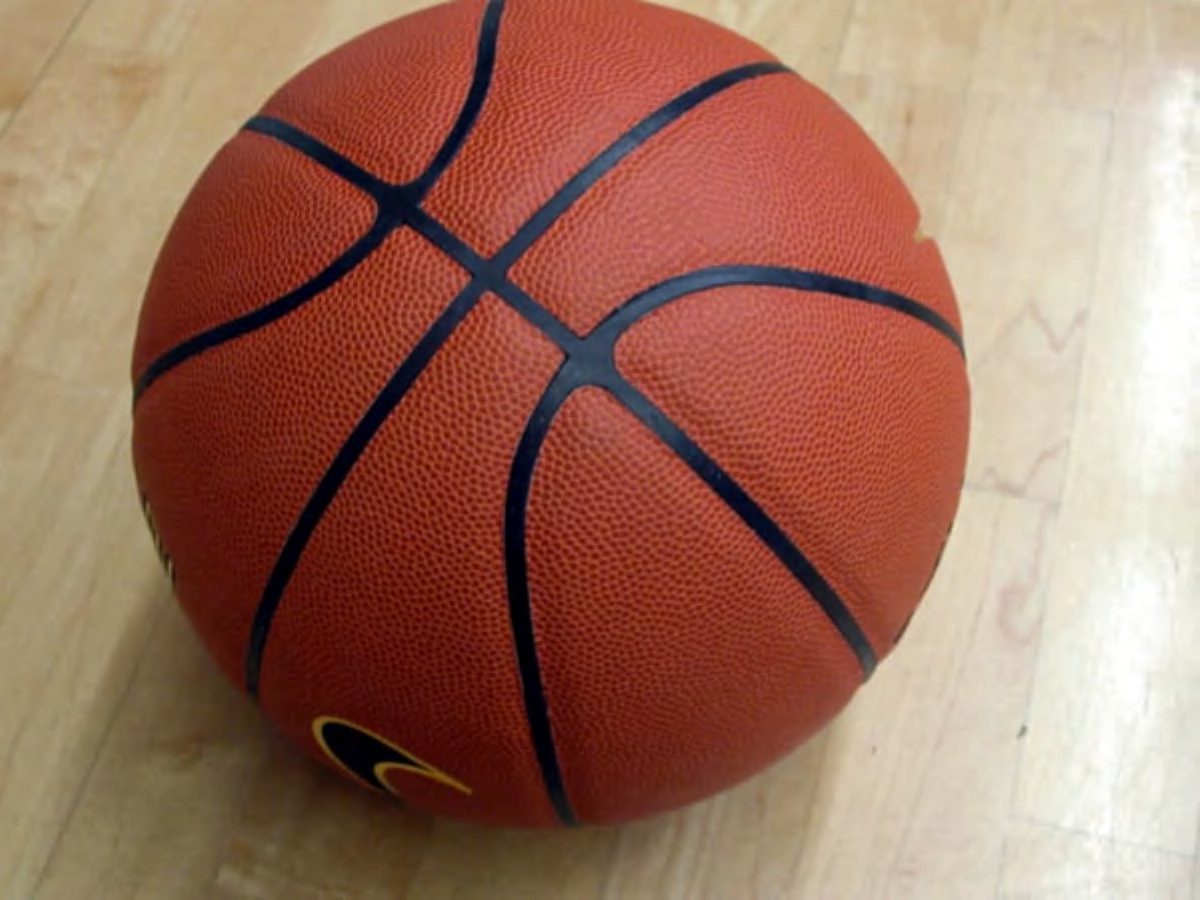
Image Source: images2.minutemediacdn.com
Fathoming the Feel: The Basketball Texture
The surface of a basketball is not smooth. Instead, it features a distinctive pebbled surface basketball design. This texture is not random; it’s a deliberate engineering choice. These small, raised bumps, often referred to colloquially as “dots” or “pebbles,” are a key component of the basketball construction. They are strategically placed and manufactured to enhance a player’s ability to grip and control the ball.
The Purpose of Pebbles
Why are these “dots” so important?
- Enhanced Grip: The primary function of the pebbled surface is to provide superior grip. When players dribble, pass, or shoot, they need a secure hold on the ball. The raised texture creates more contact points between the hand and the ball, allowing for better control, especially when the ball or hands are slightly moist.
- Improved Ball Handling: This improved grip translates directly to better ball handling. Players can execute more complex maneuvers, dribble at higher speeds, and maintain possession with greater confidence.
- Durability and Wear: The pebbled texture also contributes to the overall durability of the basketball cover. The small indentations help distribute the impact of repeated contact with the court and other surfaces, reducing the rate of wear and tear on the ball.
Material Matters: Leather vs. Synthetic
The type of basketball cover significantly influences the feel and performance of the ball, and consequently, the nature of its pebbled texture.
- Leather Basketballs: Traditionally, professional basketballs, particularly those used in leagues like the NBA, are made from genuine leather. Leather offers a superior feel and grip, and its pebbled texture is typically more pronounced and consistent. The aging process of leather can even enhance its grip and feel over time.
- Synthetic Basketballs: For recreational use, indoor/outdoor play, and a more budget-friendly option, synthetic materials like composite leather are common. These materials are engineered to mimic the feel of genuine leather but can vary greatly in texture. Some synthetic balls have a very fine pebble, while others have a more aggressive, pronounced texture. The consistency of the “dots” on synthetic balls can also differ from ball to ball due to manufacturing variations.
Deciphering the Seams: Basketball Stitching
The visible lines that crisscross a basketball are not merely decorative; they are the result of meticulous basketball stitching. These lines, often referred to as channels or seams, are integral to the basketball construction and play a crucial role in how the ball behaves.
The Anatomy of a Basketball Seam
A standard basketball is typically constructed from eight panels of material. These panels are then stitched together to form the spherical shape. The seams are the lines where these panels meet.
- Panel Count: The basketball panel count is usually eight. These panels are cut from the chosen basketball cover material (leather or synthetic) and then precisely assembled.
- Stitching Technique: The basketball stitching is strong and durable, designed to withstand the rigors of the game. Historically, basketballs were stitched using a technique similar to that of baseballs, with a waxed thread. Modern manufacturing may involve more advanced stitching methods, but the principle of securely joining the panels remains the same.
- Channel Depth and Width: The depth and width of the channels created by the stitching are critical design elements. Deeper and wider channels, like those found on an official NBA basketball, are designed to provide an even better grip for players’ fingers. This allows for more spin and control when shooting or passing.
The Impact of Seams on Play
The seams aren’t just about holding the ball together; they actively influence gameplay:
- Grip and Control: The channels provide additional gripping surfaces for the fingers. This is especially important for players looking to impart spin on the ball, a technique crucial for accurate shooting and passing.
- Aerodynamics: The seams also affect the ball’s aerodynamic properties. Their configuration can influence how the ball travels through the air, potentially affecting its bounce and trajectory.
- Feel and Feedback: The tactile sensation of the seams against the fingers provides players with feedback about the ball’s orientation and rotation, aiding in their feel for the game.
The Heart of the Ball: Basketball Construction
The creation of a basketball is a sophisticated process involving multiple stages of basketball manufacturing. It’s not just about the outer basketball cover; the internal components are equally important for a regulation basketball size and consistent performance.
Internal Workings: Bladder and Winding
Beneath the pebbled exterior lies the core of the basketball.
- The Bladder: The bladder is an inflatable sac, typically made of butyl rubber, that gives the ball its shape and bounce. It’s crucial for maintaining proper air pressure, which is essential for a regulation basketball size and consistent play.
- Nylon Winding: The bladder is usually wound tightly with nylon threads. This winding provides structural integrity and helps the ball maintain its spherical shape under pressure. The tension of the winding also influences the ball’s rebound characteristics.
From Panels to Product: The Manufacturing Process
The journey from raw materials to a finished basketball is a detailed one.
- Panel Cutting: Precisely cut panels are created from the chosen basketball cover material. The accuracy of this step is vital for ensuring the final ball is perfectly round.
- Stitching and Assembly: The panels are then stitched together, forming the characteristic channels. This is a critical stage where the skill of the craftspeople or the precision of automated machinery comes into play.
- Bladder Insertion: The inflatable bladder is inserted into the partially assembled ball.
- Inflation and Winding: The bladder is inflated, and the nylon winding is applied to give the ball its firmness and shape.
- Final Assembly and Sealing: The remaining seams are stitched, and the ball is sealed.
- Quality Control: The finished basketballs undergo rigorous quality checks to ensure they meet regulation basketball size, weight, and bounce standards.
What Makes an Official NBA Basketball?
The official NBA basketball is a benchmark of quality and performance. These balls are crafted with the highest standards of basketball construction.
- Material: They are made from premium genuine leather, offering the best in grip and feel.
- Texture: The pebbled surface is meticulously designed for optimal performance.
- Seams: The channels are engineered to be a specific depth and width to provide professional players with the ideal grip for control and spin.
- Consistency: Every official NBA basketball undergoes stringent quality control to ensure it meets precise specifications for weight, circumference, and bounce.
Examining the Variations: Different Types of Basketballs
While the core principles of basketball construction remain similar, variations exist to cater to different playing environments and skill levels.
Indoor vs. Outdoor Basketballs
The intended playing environment significantly impacts the basketball cover and its basketball texture.
- Indoor Basketballs: Primarily designed for hardwood courts, indoor basketballs are often made of premium genuine leather or high-quality composite materials. Their pebbled surface is usually finer, and they are not built to withstand the abrasive nature of outdoor surfaces.
- Outdoor Basketballs: These balls are built for durability. They typically feature a rubber or a very robust composite basketball cover with a deeper, more aggressive pebbled surface. This texture provides excellent grip on rougher surfaces, and the material is designed to resist wear and tear from concrete or asphalt.
Regulation Size and Weight
A regulation basketball size is standardized to ensure fair play across all levels of competition.
| Governing Body | Circumference (inches) | Weight (ounces) |
|---|---|---|
| NBA | 29.5 | 20-22 |
| FIBA | 29.5 | 20-22 |
| NCAA (Men’s) | 29.5 | 20-22 |
| NCAA (Women’s) | 28.5 | 17-19 |
| Youth (Size 5) | 27.0 | 17-18 |
It’s important to note that the “dots” or pebble texture will vary in prominence and density depending on the brand and material used for each ball, even within regulation specifications. The manufacturing process aims for consistency, but slight variations are inherent in any physical product.
The Art of the Pebble: Manufacturing Nuances
The creation of the pebbled surface basketball is a testament to the precision involved in basketball manufacturing.
Mold Design and Application
The pebbled pattern is typically imparted onto the basketball cover material during the manufacturing process.
- Molding: For synthetic materials, the pattern is often embossed or molded into the material itself. This involves using heated molds with the desired pebble design.
- Skiving and Texturing: For leather, the process can be more nuanced, involving skiving (thinning) the leather in specific areas and then applying a textured finish.
Consistency is Key
While the goal is a uniform pebbled surface, achieving absolute perfection across every ball is a challenge. Factors such as the natural variations in leather or the precision of molding machines can lead to slight differences in the depth or spacing of the “dots” from one ball to another. However, reputable manufacturers strive for a high degree of consistency to ensure optimal performance.
Frequently Asked Questions
Q1: Are the “dots” on a basketball individually applied?
A1: No, the “dots” are not individually applied. They are an integral part of the basketball texture, which is either molded into the basketball cover material (for synthetics) or created through specific finishing processes for leather.
Q2: Do the number of “dots” on a basketball affect its performance?
A2: While the density and depth of the pebbled surface (the “dots”) are designed to enhance grip, there isn’t a specific number that dictates performance. Rather, it’s the overall quality and consistency of the texture that matters. The channels created by the basketball stitching also play a significant role in grip.
Q3: Can I feel the bladder through the basketball cover?
A3: In a well-constructed basketball, you should not feel the bladder through the basketball cover. The winding and the thickness of the material provide a smooth, consistent surface. If you can feel the bladder, it might indicate a manufacturing defect.
Q4: What is the difference between an official NBA basketball and a recreational basketball?
A4: The primary differences lie in the material (premium leather for NBA), the precision of the basketball construction, the depth and consistency of the pebbled surface, and the specific dimensions of the channels formed by the basketball stitching. Official NBA balls are made to higher performance standards.
Q5: How do I maintain the texture of my basketball?
A5: To maintain the texture and longevity of your basketball, avoid leaving it in extreme temperatures and clean it periodically with a damp cloth. For leather balls, specialized cleaners can help preserve the material. Avoid using harsh chemicals.
In conclusion, the question of “how many dots are on a basketball” leads us down a fascinating path into the intricate world of basketball manufacturing and design. It’s not about a countable number of dots, but rather the sophisticated engineering of the basketball texture, the crucial role of basketball stitching, and the overall quality of basketball construction that defines a ball’s performance. Whether you’re holding an official NBA basketball or a well-loved recreational ball, the carefully crafted surface and seams are designed to give you the best possible grip and control, enhancing every dribble, pass, and shot.