What is the size of an NBA basketball hoop? An NBA basketball hoop, comprising the rim and net, is suspended at a height of 10 feet (3.05 meters) above the court. The regulation basketball rim diameter is 18 inches (45.72 cm), and it is attached to a backboard.
The game of basketball, with its fast-paced action and strategic plays, often revolves around the seemingly simple act of getting the ball through the hoop. But how big is this iconic piece of sporting equipment? Understanding the specific measurements of an NBA basketball hoop provides crucial context for the game’s dynamics, from player shooting arcs to defensive strategies. This article delves into the detailed basketball hoop measurements that define the NBA experience.
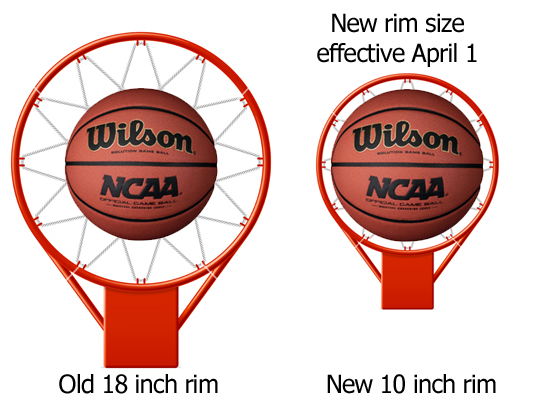
Image Source: blogger.googleusercontent.com
The Standard Basketball Hoop Size: More Than Just a Hoop
The term “basketball hoop” often conjures an image of just the circular rim and the net. However, in the context of official NBA play, the hoop assembly is a more complex structure, including the rim, net, backboard, and the support system that holds it all in place. When we talk about the standard basketball hoop size, we’re encompassing all these elements, though the most critical dimensions relate to the rim itself and its height.
NBA Basketball Hoop Height: The Unchanging Standard
The NBA basketball hoop height is one of the most consistent and fundamental aspects of the game. Since the early days of basketball, the target has always been set at 10 feet (3.05 meters) from the playing surface. This specific height was established by James Naismith, the inventor of basketball, and has remained a constant throughout the sport’s evolution. This unwavering measurement is crucial because it dictates the trajectory and power required for successful shots. Players train their entire careers to master the art of shooting at this precise height, making it a universal challenge for all competitors.
Basketball Hoop Height in Feet: A Familiar Unit
For many in the United States, the basketball hoop height in feet is the most commonly cited measurement: 10 feet. This simple, round number is deeply ingrained in the sport’s lexicon. Whether you’re playing in an NBA arena or a local park, the 10-foot mark is the universal standard for a regulation hoop. This consistency allows players to develop transferable skills regardless of where they play.
Basketball Hoop Height in Meters: Global Consistency
Internationally, the basketball hoop height in meters is equally significant. At 3.05 meters, this measurement ensures that the sport is played under identical conditions across the globe. The metric system’s adoption in many countries means this figure is the primary reference point for players and coaches outside of the US. The commitment to this exact height, whether expressed in feet or meters, underscores the global nature of professional basketball and the shared challenge it presents.
Regulation Basketball Rim Diameter: Precision in Play
The regulation basketball rim diameter is another critical dimension that directly influences the game. The inner diameter of the rim is precisely 18 inches (45.72 cm). This measurement is not arbitrary; it’s a carefully chosen size that presents a significant but achievable target for the basketball, which itself has a diameter of approximately 9.4 to 9.5 inches (23.8 to 24.1 cm).
Basketball Hoop Diameter: The Crucial 18 Inches
The basketball hoop diameter being 18 inches means there is a 4.5-inch clearance on either side of the ball when it’s perfectly centered within the rim. This relatively small margin for error is what makes shooting a skill that requires immense practice and precision. Even a slight deviation in the ball’s trajectory or spin can result in a miss. This tight tolerance is a key factor in the drama of basketball, where shots can rattle in or bounce out, deciding the fate of games.
NBA Regulation Hoop Specs: The Complete Picture
Beyond the rim’s height and diameter, other NBA regulation hoop specs contribute to the overall integrity and fairness of the game. These specifications ensure that all professional games are played on equipment that meets a stringent standard.
Official NBA Backboard Dimensions: The Canvas for the Hoop
While the hoop itself is central, the official NBA backboard dimensions are also important. NBA backboards are typically made of tempered glass. They measure 6 feet wide by 3.5 feet high (1.83 meters wide by 1.07 meters high). The backboard is positioned so that its bottom edge is 4 feet (1.22 meters) in front of the plane of the rim. The rim is centered horizontally on the backboard, meaning its center is 3 feet (0.91 meters) from either side edge of the backboard.
Backboard Attachment and Rim Mounting
The rim is mounted to the backboard with a specific offset. The center of the rim is 6 inches (15.24 cm) in from the face of the backboard. This offset is crucial for several reasons. It allows players to perform “alley-oop” dunks and layups without the ball being immediately blocked by the backboard itself. It also provides a predictable rebound surface for bank shots, which are a vital part of offensive strategy.
The rim itself is a sturdy steel ring, typically made of solid steel to withstand the immense force of players hanging on it after dunks. It is painted orange and is attached to the backboard using a mounting plate. The net, made of nylon or similar material, attaches to the 12 hooks or loops around the rim. The net’s length is designed to slightly slow the ball’s passage through the rim, providing a satisfying visual and auditory cue of a successful shot.
The Importance of Consistency in Hoop Size
The standardization of these basketball hoop measurements is paramount for the sport. Imagine if the hoop height or rim diameter varied from game to game or arena to arena. This inconsistency would make it incredibly difficult for players to develop reliable shooting techniques. Their muscle memory, developed over thousands of hours of practice, relies on the predictability of the target.
- Player Development: Athletes train to shoot at a specific height and aim for a specific opening. Variations would disrupt this process.
- Fair Competition: Standardized equipment ensures a level playing field, where the outcome is determined by skill and strategy, not by variations in equipment.
- Spectator Experience: Consistent dimensions contribute to the recognizable flow and rhythm of the game that fans have come to expect.
Materials and Design: Beyond the Basic Measurements
While the dimensions are fixed, the materials and design of NBA hoops have evolved over time to enhance safety and durability.
Rim Strength and Flexibility
Modern NBA rims are designed to be break-away rims. This means they have a spring mechanism that allows the rim to flex downwards when a player hangs on it. This feature significantly reduces the risk of injury to players and also protects the backboard and support structure from damage. Despite this flexibility, the rim immediately returns to its horizontal position, ensuring the game can continue without interruption. The force required to flex the rim is standardized, typically around 230-260 pounds (104-118 kg) applied at the lowest point of the rim.
Net Design and Functionality
The net, while appearing simple, plays a role in the game. Its open-weave design allows air to pass through, preventing it from snagging the ball and holding it. The net length is typically between 15 to 18 inches (38 to 45 cm), and it should not be too tight, as this can affect the sound of the ball going through the hoop and potentially its trajectory. The net’s movement also adds to the visual excitement of a made basket.
The Evolution of the NBA Hoop
While the core measurements have remained constant, the technology and materials used in NBA basketball hoops have seen advancements. Early basketball hoops were often made of wire or wood, and backboards were made of solid wood. The introduction of tempered glass backboards in the 1970s was a significant change, offering better visibility for players and spectators and a more consistent rebound surface. The development of break-away rims was another crucial safety innovation.
Comparing NBA Hoops to Other Levels of Play
It’s important to note that while the NBA adheres to these strict NBA regulation hoop specs, other levels of basketball may have different standards, especially at youth levels.
- Youth Basketball: For younger players, particularly those in elementary and middle school, the hoop height is often lowered to 8 or 9 feet. This adjustment makes the game more accessible and enjoyable for children, allowing them to develop shooting skills without being overly frustrated by the height.
- FIBA (International Basketball Federation): FIBA, the governing body for international basketball, uses the same standard basketball hoop size as the NBA regarding rim height (10 feet / 3.05 meters) and rim diameter (18 inches / 45.72 cm). This global uniformity is essential for international competitions like the Olympics and the FIBA World Cup.
Frequently Asked Questions About NBA Basketball Hoops
Q1: Is the NBA basketball hoop height always 10 feet?
Yes, the NBA basketball hoop height is consistently 10 feet (3.05 meters) above the playing surface in all NBA games.
Q2: What is the exact diameter of an NBA basketball rim?
The regulation basketball rim diameter is 18 inches (45.72 cm) on the inside.
Q3: What are the dimensions of an NBA backboard?
The official NBA backboard dimensions are 6 feet wide by 3.5 feet high (1.83 meters wide by 1.07 meters high). The rim is mounted with a 6-inch offset from the face of the backboard.
Q4: Can I buy an NBA regulation hoop for my home?
Yes, many sporting goods stores sell basketball hoops that meet NBA regulation hoop specs, though residential models may vary in material and durability compared to professional-grade equipment. It’s important to check the specifications if you are looking for a regulation-sized hoop.
Q5: Why is the NBA hoop height so important?
The basketball hoop rim height is critical for the skill development of players and the competitive balance of the game. Its consistent height across all professional games ensures a standardized challenge that players train for throughout their careers.
Q6: Does the net affect the ball going through the hoop?
The net is designed to slow the ball slightly and provide a visual cue, but its primary function is not to alter the trajectory in a significant way. A well-made net allows the ball to pass through cleanly.
Q7: Are there any differences in hoop size between NBA and WNBA?
No, both the NBA and WNBA use the same standard basketball hoop size, including the 10-foot height and 18-inch rim diameter.
Q8: What is the weight of an NBA basketball hoop assembly?
The weight can vary significantly depending on the model and support structure, but a professional-grade backboard, rim, and net assembly can weigh several hundred pounds to ensure stability.
Q9: What materials are typically used for NBA hoops?
NBA backboards are usually made of tempered glass for durability and a clean rebound. Rims are made of solid steel, often with a break-away mechanism. Nets are typically made of nylon.
Q10: How far is the rim from the edge of the backboard?
The center of the rim is 6 inches (15.24 cm) from the face of the backboard.
In conclusion, the size of an NBA basketball hoop, from its precise 10-foot height to its 18-inch diameter rim, is a fundamental element that shapes the very nature of the game. These basketball hoop measurements are not mere details; they are the bedrock upon which the sport’s strategy, skill, and excitement are built. Whether you’re a player, a coach, or a fan, appreciating these dimensions provides a deeper insight into the beautiful complexity of basketball.