Yes, you absolutely can double team in basketball. A double team involves two defensive players guarding one offensive player.
Basketball is a dynamic game, and defensive strategies are constantly evolving to counter offensive threats. One of the most common and impactful defensive tactics is the double team defense. But what exactly is it, why is it used, and when is it most effective? This guide will dive deep into the world of double teaming in basketball, exploring its nuances, benefits, and potential drawbacks.
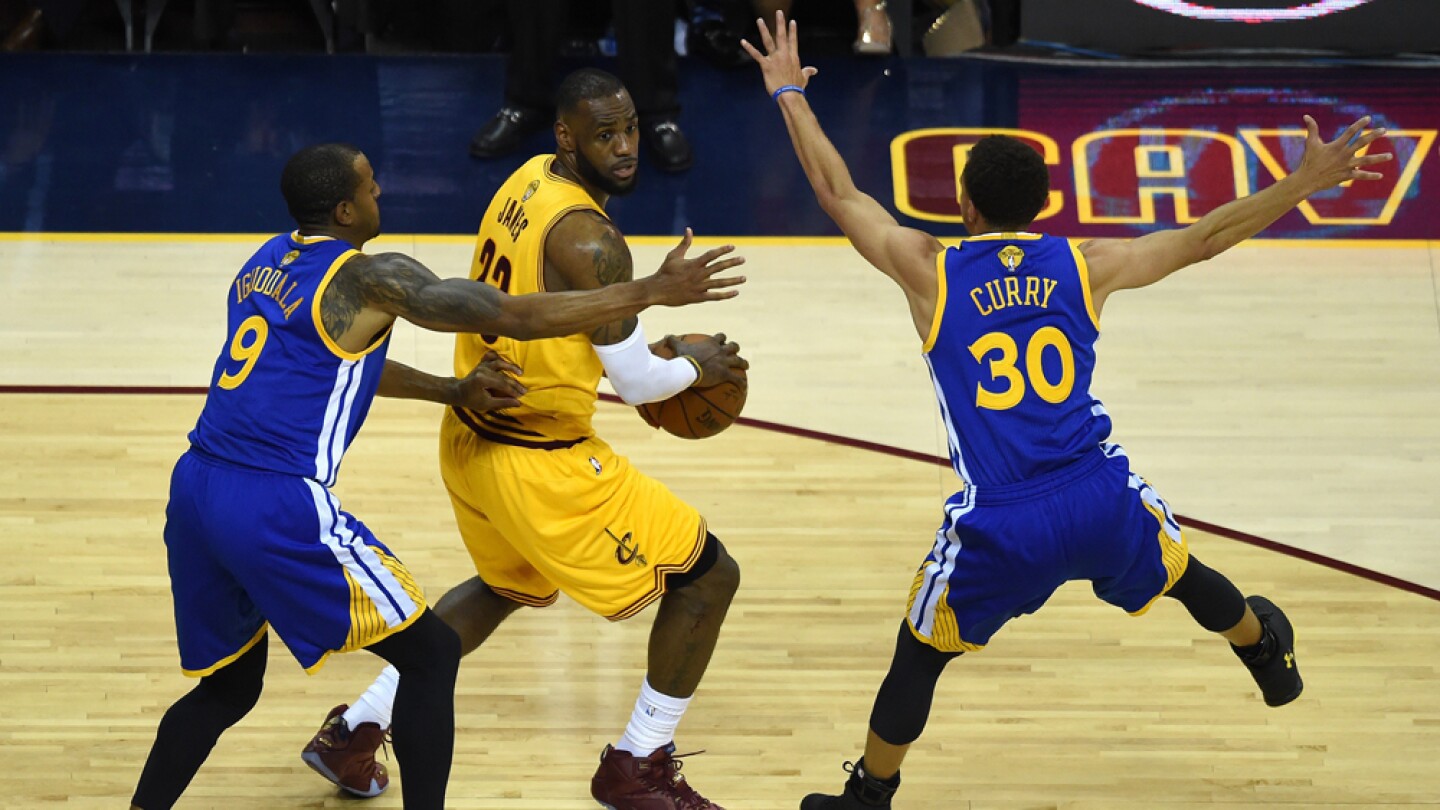
Image Source: nbcsports.brightspotcdn.com
What is a Double Team?
At its core, a double team is a defensive strategy where two players from the defending team focus their attention on a single offensive player. This is typically done to disrupt the offensive player’s ability to pass, dribble, or shoot, and to force a turnover or a difficult play. The goal is to overwhelm the offensive player with defensive pressure.
Why Double Team?
The primary reasons for employing a double team are:
- To Disrupt a Star Player: When an opposing player is exceptionally talented and carrying a significant portion of their team’s offense, a double team can neutralize their impact.
- To Force Turnovers: By swarming the ball handler, defenders can create opportunities for steals.
- To Slow Down the Offense: A well-executed double team can disrupt the flow of the offense, forcing them to reset and take more time off the clock.
- To Prevent Easy Scoring Opportunities: Against dominant post players or potent perimeter shooters, a double team can prevent them from getting clean looks at the basket.
When to Consider a Double Team
The decision to double team is strategic and depends on several factors:
- The Talent of the Offensive Player: Is the player you’re doubling an elite scorer or playmaker?
- The Offense’s Tendencies: Does the team rely heavily on one player? Do they have weak secondary ball handlers?
- Your Team’s Defensive Strengths: Are your other defenders capable of rotating and covering open players?
- Game Situation: Is it a crucial moment in the game? Are you trying to force a turnover or get a stop?
Types of Double Teams and Their Applications
Double teams are not a one-size-fits-all solution. They can be implemented in various ways, depending on the overall defensive scheme.
H3: The Classic Double Team on the Ball Handler
This is the most recognizable form of a double team. When a skilled dribbler or penetrator has the ball, two defenders converge on them.
H4: Goals of Doubling the Ball Handler
- Confine Dribbling: Make it difficult for the player to advance the ball up the court or into scoring position.
- Force a Pass: Encourage the player to make a quick, often errant, pass to a teammate.
- Create a Steal Opportunity: The tight coverage can lead to deflections and steals.
H4: Risks of Doubling the Ball Handler
- Open Player on the Weak Side: When two defenders commit to the ball, it leaves another offensive player open. If the offense can make a quick pass, they can exploit this advantage.
- Overplaying and Fouls: Defenders can get caught out of position or commit fouls trying to contain the offensive player.
H4: Doubling in the Post
When an opponent has a dominant post player, doubling them in the low post is a common strategy.
H5: Objectives of Post Double Teams
- Limit Scoring: Prevent the post player from backing down their defender and scoring close to the basket.
- Force Passes Out of the Post: Make the post player a passer rather than a scorer.
H5: Challenges of Post Double Teams
- Easier Kick-Outs: Post players often have good vision and can find open teammates on the perimeter if the double team is slow to react.
- Fouls in the Paint: Aggressive double teams in the post can lead to easy fouls.
H4: Trapping in Basketball
Trapping in basketball is a more aggressive form of the double team. It usually occurs on the perimeter, often after a sideline inbounds pass or in the backcourt. The aim is to trap the ball handler against the sideline or baseline, limiting their escape options.
H5: Key Elements of a Trap
- Two Defenders Converge: Two defenders quickly close in on the ball handler.
- Force to the Sideline/Baseline: The trap is designed to push the ball handler towards an out-of-bounds area.
- Deny Passing Lanes: The trapping defenders and other teammates try to cut off passing angles.
H5: When Trapping is Effective
- Against Weaker Ball Handlers: Players who are less adept at dribbling under pressure.
- To Disrupt Fast Breaks: Preventing the opponent from quickly advancing the ball.
- To Force Mistakes: The high-pressure situation can lead to careless turnovers.
H4: The “Soft” Double Team vs. The “Hard” Double Team
The intensity of the double team matters.
H5: Soft Double Team
- Purpose: To slow down the ball handler and prevent immediate penetration or an easy pass.
- Execution: Defenders maintain a bit more space, focusing on cutting off dribble lanes rather than immediate pressure. The aim is to force the player to make a decision without overwhelming them.
H5: Hard Double Team
- Purpose: To force an immediate turnover or a difficult, hurried pass.
- Execution: Defenders aggressively swarm the ball handler, aiming to strip the ball or force them into an impossible situation. This requires excellent communication and quick rotations from the rest of the defense.
Implementing a Successful Double Team Strategy
A double team is only as good as the support it receives from the rest of the defense. It requires a cohesive unit working together.
H3: The Role of Help Defense
A successful help defense is crucial when employing a double team. When two defenders commit to one offensive player, the remaining three defenders must adjust.
- “Rotations”: The defender guarding the offensive player nearest to the double team must “rotate” over to cover the ball handler.
- “Sagging”: Other defenders might “sag” off their assigned player slightly to provide help in the passing lanes or to cover potential cutters.
- “Denying”: Defenders on the weak side of the court may play “denial defense” to prevent easy passes to open shooters.
H3: Defensive Rotations Explained
Defensive rotations are the coordinated movements of players to cover open spaces or players when a teammate is drawn out of position. In a double team scenario, these rotations are vital to prevent the offense from easily exploiting the numerical disadvantage on the ball.
- First Rotator: The defender closest to the double-teamed player is usually the first to rotate. They are responsible for covering the ball handler.
- Subsequent Rotations: As the first rotator moves, their original assignment might become open. This triggers a chain reaction of rotations throughout the defense.
- Communication is Key: Players must communicate constantly to ensure everyone knows who they are covering and when to rotate.
H3: Switching on Defense
In certain basketball defensive schemes, especially when facing screens or quick ball movement, defenders might switch on defense. This means that when a screen is set, the defenders involved swap assignments.
H4: When Switching Complements a Double Team
- Preventing Open Shots: If a double team is applied to a dominant scorer, and a screen is used to free up another player, switching can prevent the screener’s defender from being forced to help and leaving their player open.
- Maintaining Coverage: In some pick-and-roll defense scenarios, a switch can ensure that the primary defender doesn’t get screened off, while the helper can still maintain a defensive presence.
H3: Zone Defense Strategies and Double Teams
While double teams are often associated with man-to-man defense, they can also be incorporated into zone defense strategies.
H4: Zone Double Teams
- “Pack the Paint” Zones: Some zone defenses, like a 2-3 zone, naturally collapse towards the basket. If a strong player receives the ball in the middle of the zone or near the basket, multiple zone defenders might converge, effectively creating a double team.
- Targeted Traps in Zones: Certain zone variations might instruct defenders to aggressively double-team the ball handler in specific areas of the court to force turnovers.
H4: Zone vs. Man-to-Man Double Teams
| Feature | Man-to-Man Double Team | Zone Defense Double Team |
|---|---|---|
| Focus | Specific player | Specific area of the court |
| Communication | Primarily player-to-player | Zone responsibilities and shifts |
| Responsibility | Assigned defender to original player | Whoever is in the zone area |
| Vulnerability | Open man on the weak side, mismatches after switching | Gaps in the zone, offensive players finding open spaces |
| Primary Goal | Neutralize a star, force turnovers from a specific player | Disrupt offensive flow, protect the paint, force outside shots |
H3: Pick and Roll Defense and Double Teams
The pick and roll defense is a common offensive action, and how a defense handles it often dictates whether a double team is employed.
H4: Common Pick and Roll Defensive Approaches
- “Show and Recover”: The defender guarding the screener briefly steps out (“shows”) to impede the ball handler’s progress before recovering to their man. This isn’t a double team but can look similar.
- “Hedge”: Similar to a show, but the defender stays out longer, momentarily creating a double team.
- “Switch”: Defenders swap assignments.
- “Full Blitz/Double Team”: Both defenders involved in the screen aggressively double-team the ball handler. This is a high-risk, high-reward strategy.
H5: When to Double Team the Pick and Roll
- Against Elite Ball Handlers: If the ball handler is particularly dangerous, a double team can prevent them from easily getting past the screen.
- To Force the Roller: If the player setting the screen is not a major scoring threat, doubling the ball handler forces them to make a difficult pass to the roller, who may then face a mismatch or another defender.
H3: The Importance of Defensive Pressure
A well-executed double team relies heavily on sustained defensive pressure. This means consistently making it difficult for the offense to execute their plays.
H4: Elements of Defensive Pressure
- On-Ball Pressure: Defenders are actively trying to disrupt the dribble, steal the ball, or force the player into uncomfortable positions.
- Off-Ball Pressure: Defenders are actively denying passing lanes, preventing easy catches, and making offensive players work hard to get open.
- Anticipation: Defenders read the offense, anticipate passes, and react quickly to disrupt plays.
H3: Examining Basketball Defensive Schemes
Basketball defensive schemes are the overarching strategies a team employs to prevent the opponent from scoring. Double teaming is a tactic within these schemes.
H4: How Double Teams Fit into Schemes
- Aggressive Schemes: Teams that prefer high-pressure defense and forcing turnovers will incorporate double teams more frequently.
- Containment Schemes: Teams that focus on limiting penetration and forcing outside shots might use double teams more selectively, primarily on star players.
- Matchup Zones: These hybrid defenses can involve elements of both man-to-man and zone, allowing for more flexibility in applying double teams based on offensive actions.
Potential Downsides of Doubling
While powerful, double teaming is not without its risks.
H3: Giving Up Open Shots
The most significant risk is leaving an offensive player open. If the offense moves the ball quickly and with good passing, they can exploit the extra defender on the ball by finding the open man. This is why defensive rotations and communication are paramount.
H3: Fouls and Foul Trouble
Aggressive defense, especially double teaming, can lead to an increase in fouls. If key defenders are in foul trouble, it can severely hamper the team’s ability to execute their defensive strategy.
H3: Pace of Play
Constant double teaming can sometimes be tiring. If the offensive team can consistently break the double team and get into transition, they can exploit the fact that the defense might be out of position.
H3: Mismatches on Switches
If a double team is broken by a pass, and a switch occurs to cover the original ball handler, the offensive team might have created a favorable matchup for another player.
When NOT to Double Team
Knowing when not to double team is as important as knowing when to do it.
H3: Against Weak Ball Handlers Who Can’t Pass
If the player being doubled is a poor passer and the offensive team has strong secondary ball handlers or cutters, doubling that player might be a mistake. They might not be able to exploit the open player, but the doubled player could still get rid of the ball effectively.
H3: When Your Team Lacks Mobility
If your defenders are not quick enough to recover or rotate effectively, a double team will likely lead to easy scoring opportunities for the opponent.
H3: When You Don’t Have Clear Communication
A double team without clear communication is a recipe for disaster. If players don’t know who is covering whom after the double team, it creates confusion and open players.
Conclusion
Can you double team in basketball? Absolutely. It’s a fundamental defensive tactic that, when executed properly, can be incredibly effective. It requires a deep understanding of basketball defensive schemes, excellent communication, and solid help defense and defensive rotations. Whether you’re employing trapping in basketball, focusing on pick and roll defense, or implementing zone defense strategies, the ability to effectively apply defensive pressure with a double team can be a game-changer. However, always weigh the potential rewards against the risks, and ensure your team is prepared to execute the necessary rotations and switches to mitigate the inherent vulnerabilities.
Frequently Asked Questions (FAQ)
H4: What is the primary goal of a double team?
The primary goal of a double team is to disrupt an offensive player’s ability to make a play, forcing turnovers or difficult passes by overwhelming them with two defenders.
H4: Is doubling a player always a good strategy?
No, doubling a player is not always a good strategy. It can leave another offensive player open, and if your team cannot rotate effectively or communicate well, it can lead to easy scoring opportunities for the opponent.
H4: How does a double team differ from trapping?
Trapping is a more aggressive and specific form of a double team, usually executed on the perimeter to force a turnover by cornering the ball handler against the sideline or baseline. A double team can occur anywhere on the court and is not always as focused on forcing the player into a specific area.
H4: What is “help defense” in the context of a double team?
Help defense refers to the actions of the defenders who are not directly involved in the double team. They must shift their positions to cover the open player or passing lanes created by the double team, ensuring the offense doesn’t get an easy shot.
H4: Can you use double teams in a zone defense?
Yes, double teams can be part of zone defense strategies. Many zones naturally collapse towards the ball, and specific defensive adjustments within a zone can involve two defenders converging on the ball handler in certain areas.