A standard basketball goal is 10 feet (3.05 meters) from the playing surface to the top of the rim.
The world of basketball, from the roaring crowds in professional arenas to casual games on driveways, operates under a set of established rules and specifications. One of the most fundamental yet crucial of these is the height of the basketball goal. This seemingly simple measurement dictates much of the game’s strategy, skill, and even its appeal. But what exactly constitutes a standard basketball goal height, and why is it set at this particular level? This in-depth exploration will dive into the specifics of basketball hoop height across different levels of play, from professional leagues to youth programs, examining the history, the reasons behind the standard, and the impact it has on the sport.
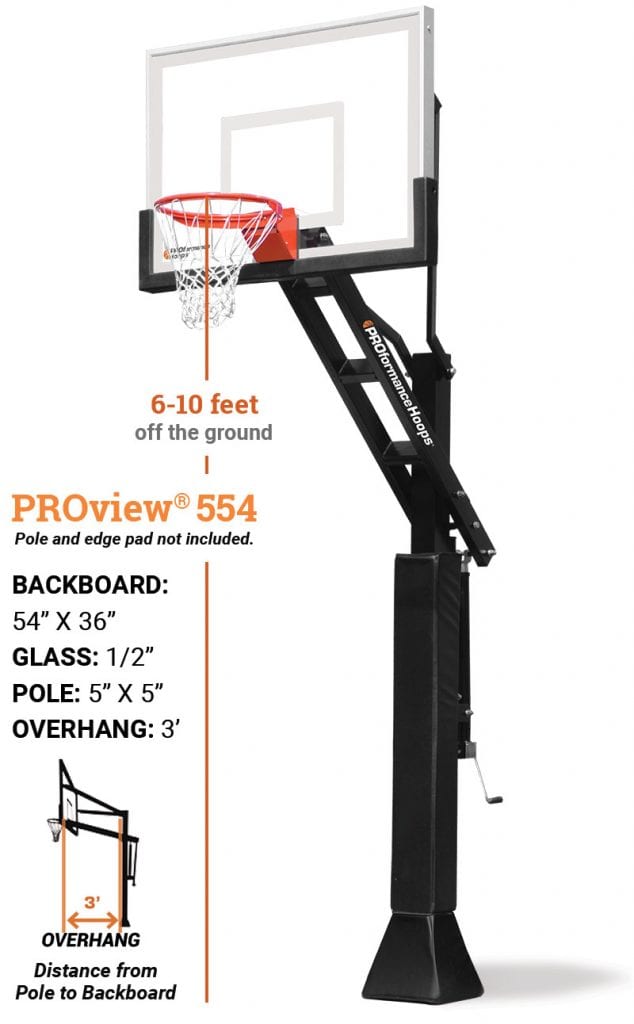
Image Source: superiorplay.com
The Pinnacle: Regulation Basketball Rim Height
The regulation basketball rim height is a cornerstone of the sport, ensuring a consistent challenge and playing field for athletes worldwide. This 10-foot standard is not an arbitrary number; it’s a carefully considered dimension that has evolved over the history of basketball.
A Look Back: The Genesis of the 10-Foot Standard
When Dr. James Naismith invented basketball in 1891, the game was quite different. The first “goals” were actually peach baskets, nailed to the gymnasium balcony railing at a height of 10 feet. This initial setup was partly due to the available equipment and partly to create a challenge that required skill and strategy rather than brute force. The peach baskets remained intact for a period, and when the bottoms were eventually removed to allow the ball to pass through, the 10-foot height persisted as the target. This early decision set a precedent that has largely endured, cementing the 10-foot mark as the universal standard for competitive basketball.
Why 10 Feet? The Rationale Behind the Height
The 10-foot basketball hoop height was chosen for several key reasons:
- Skill Development: This height demands a balance of athleticism, shooting technique, and strategic positioning. Players need to jump high enough to dunk, shoot with arc and accuracy, and defend against opponents trying to score. Too low, and the game becomes dominated by dunks. Too high, and shooting becomes excessively difficult for most players.
- Game Dynamics: The 10-foot rim promotes a dynamic and engaging game. It allows for a variety of offensive and defensive strategies, including jump shots, layups, rebounds, and blocked shots. It creates opportunities for both graceful finesse and powerful athleticism.
- Inclusivity: While demanding, the 10-foot height is still achievable for a wide range of players with practice and dedication. This inclusivity is vital for the sport’s growth and appeal across different ages and skill levels.
Professional Peaks: NBA and FIBA Hoop Dimensions
While the 10-foot standard is globally recognized, it’s important to note that major professional leagues adhere strictly to this measurement.
NBA Hoop Height: The Benchmark
The NBA hoop height is precisely 10 feet. This unwavering standard is a critical component of the league’s identity and the athleticism displayed on its courts. The precision of this measurement ensures that the challenges faced by NBA players are consistent, allowing for fair competition and the showcasing of elite talent. From Michael Jordan’s iconic hang time to LeBron James’ powerful dunks, the 10-foot rim has been the canvas for countless legendary moments.
FIBA Basketball Goal Height: A Global Standard
The FIBA basketball goal height also stands at 10 feet (3.05 meters). The International Basketball Federation (FIBA) governs basketball worldwide, and its adoption of the 10-foot standard means that international competitions, including the Olympics and the FIBA World Cup, are played under the same fundamental height requirements as the NBA. This global uniformity is essential for the consistent development and promotion of the sport across different countries and cultures.
Beyond the Pros: Youth Basketball Hoop Height
Recognizing that younger players are still developing their physical capabilities, a modified approach is taken for youth basketball.
Adjusting for Growth: Youth Basketball Hoop Height
The youth basketball hoop height is adjusted to allow children to develop proper shooting form and experience success. This is crucial for fostering a love for the game and preventing frustration. While there isn’t one single “youth height” that applies to all ages, common adjustments include:
- Ages 6-8: Many organizations recommend a hoop height of 6 feet (1.83 meters).
- Ages 9-11: A hoop height of 8 feet (2.44 meters) is often used.
- Ages 12 and up: Players typically transition to the standard 10-foot rim.
These adjustments are part of a broader effort to make the game accessible and enjoyable for developing athletes. They allow children to practice shooting with the correct arc and release, build confidence, and gradually adapt to the challenges of a regulation-height hoop as they grow.
The Components of a Basketball Goal System
A basketball goal system is more than just the rim itself. Several components work together to create the complete structure.
The Rim and Net: The Crucial Elements
The regulation basketball rim height is measured to the top of the rim. The rim itself is a metal ring, typically 18 inches (45.7 cm) in diameter on the inside. Attached to the rim is the official basketball net height, which is designed to hang downwards, slowing the ball slightly as it passes through. The net should be between 15 and 18 inches (38-45 cm) long and made of white nylon or cotton cord. The net’s primary function is to provide a visual cue for a successful shot and a satisfying swish sound that signifies a made basket.
The Backboard and Post: Support and Stability
The backboard, usually made of tempered glass, acrylic, or polycarbonate, serves as a surface for bank shots and provides a visual target. The standard basketball post height refers to the vertical pole that supports the backboard and rim. This post needs to be sturdy and stable to withstand the forces exerted on the goal, especially during dunks and rebounds. The entire assembly, including the post, backboard, and rim, must be securely anchored to the ground or a wall to ensure safety and durability.
Basketball Equipment Specifications: A Detailed Look
Beyond the height, various basketball equipment specifications ensure fairness and consistency in the game. These include:
- Ball Size: The size and weight of the basketball itself are standardized. For men’s professional and college play, a size 7 ball is used (circumference 29.5 inches, weight 20-22 ounces). For women’s and youth play, a size 6 ball is common (circumference 28.5 inches, weight 18-20 ounces).
- Court Dimensions: The playing area also has specific dimensions. An NBA court is 94 feet long and 50 feet wide. A FIBA court is slightly smaller at 28 meters (91.86 feet) long and 15 meters (49.21 feet) wide. These court dimensions basketball games are played within also influence the game’s flow and strategy.
- Free Throw Line: The free-throw line is 15 feet from the front of the backboard. This distance is crucial for free-throw shooting, requiring players to have good aim and control from a set distance.
Adjustable Basketball Hoops: Flexibility and Home Play
For recreational players and families, adjustable basketball hoop height systems offer a versatile solution.
The Benefits of Adjustability
Adjustable basketball hoop height systems are popular for home use, parks, and community centers. They allow users to:
- Accommodate Different Ages and Skill Levels: As mentioned, younger players benefit from lower hoops. Adjustable systems allow parents to lower the hoop for their children and then raise it back to the regulation height as they grow or when adults want to play.
- Practice Specific Skills: Players can use lower settings to work on dunking or develop shooting form without the immediate challenge of a 10-foot rim.
- Adaptability for Events: In casual settings, adjustable hoops can be modified for various games or events, catering to a wider range of participants.
How Adjustability Works
These systems typically use a crank mechanism or a pin-and-hole system to change the height of the rim. The height can be adjusted from as low as 5 feet (1.5 meters) up to the regulation 10 feet. It’s important to ensure that the adjustable system is securely locked at the desired height and that the entire structure is stable and safely installed.
The Impact of Hoop Height on Gameplay
The 10-foot rim significantly shapes how basketball is played, influencing offensive and defensive strategies, player development, and the overall spectacle of the game.
Offensive Strategies: Shooting, Driving, and Dunking
- Shooting Arc: The 10-foot height necessitates an effective shooting arc. Players must learn to shoot with enough loft to clear the rim and get the ball to drop through. This requires proper technique in wrist snap, follow-through, and ball rotation.
- Driving and Layups: Driving to the basket requires players to get the ball above the rim to score. This often involves controlled layups or scooping shots to avoid defenders and clear the rim.
- Dunking: While a crowd-pleasing aspect of the game, dunking requires significant vertical leap. The 10-foot height makes dunking an impressive feat of athleticism, reserved for players with exceptional jumping ability.
Defensive Strategies: Rebounding and Shot Blocking
- Rebounding: The 10-foot height dictates the trajectory of missed shots. Rebounders must anticipate where the ball will bounce off the rim and backboard, positioning themselves to secure possession. The height also means that tipped balls can remain in play, leading to exciting scrambles.
- Shot Blocking: Defending the basket at 10 feet requires players with good timing, agility, and reach. Shot blockers aim to disrupt shots before they reach the rim or swat them away once in the air. The height creates a vertical challenge for both offensive and defensive players contesting shots near the basket.
Player Development and Skill Progression
The consistent 10-foot standard allows for a structured progression of player development. As players grow and improve, they are challenged by the same regulation height, fostering continuous skill refinement. The ability to adjust for youth players ensures that they build a solid foundation of fundamental skills before facing the full challenge of the standard rim.
Common Misconceptions and Clarifications
Despite the clear standard, some confusion can arise regarding basketball hoop height.
Is the Height Measured to the Top or Bottom of the Rim?
The regulation basketball rim height is measured to the top of the rim. This is the point closest to the backboard.
Are All Basketball Hoops the Same Height?
No. While the standard basketball goal for professional and most competitive adult play is 10 feet, youth basketball hoop height is often adjusted to lower levels to accommodate younger players. Adjustable basketball hoop height systems allow for further customization.
What About Other Sports?
It’s important to distinguish basketball goals from those in other sports. For instance, soccer goals or hockey nets have entirely different dimensions and serve different purposes within their respective games. The basketball equipment specifications are unique to basketball.
Conclusion: The Enduring Standard
The 10-foot basketball goal is more than just a physical dimension; it’s a fundamental element that shapes the entire sport of basketball. From its origins with peach baskets to the meticulously engineered hoops of professional arenas, this height has proven to be a perfect balance, promoting skill, athleticism, and engaging gameplay. Whether you’re an aspiring professional following the NBA hoop height or a parent setting up a hoop for a young child using an adjustable basketball hoop height, the 10-foot standard, with its thoughtfully implemented youth variations, remains the universally recognized benchmark for the beloved game of basketball. The clarity on regulation basketball rim height ensures that the game is played on a level playing field, allowing talent and dedication to shine through on courts around the globe.
Frequently Asked Questions (FAQ)
Q1: What is the official height of a basketball hoop?
A1: The official height of a basketball hoop, for most competitive adult and professional play, is 10 feet (3.05 meters) from the playing surface to the top of the rim.
Q2: Is the NBA hoop height different from FIBA?
A2: No, both the NBA (National Basketball Association) and FIBA (International Basketball Federation) use the same regulation basketball rim height of 10 feet.
Q3: What is the typical height for a youth basketball hoop?
A3: Youth basketball hoop height is often adjusted to accommodate younger players’ development. Common heights include 6 feet for younger children (ages 6-8) and 8 feet for older children (ages 9-11), before transitioning to the standard 10-foot rim.
Q4: How is the height of the basketball goal measured?
A4: The height is measured from the playing surface directly below the hoop to the very top of the metal rim.
Q5: Can I adjust the height of a basketball hoop at home?
A5: Yes, many residential basketball hoops are adjustable. These systems allow you to change the basketball hoop height using a crank or pin mechanism, typically ranging from around 5 feet up to the regulation 10 feet.
Q6: What are the dimensions of the basketball rim itself?
A6: A regulation basketball rim has an inside diameter of 18 inches (45.7 cm).
Q7: Does the height of the hoop affect how the ball is shot?
A7: Yes, the 10-foot hoop height significantly influences shooting technique, requiring players to develop an appropriate arc and follow-through to get the ball to drop through the net.
Q8: What is the standard basketball post height?
A8: The “post height” usually refers to the height of the vertical support structure holding the backboard and rim. For a regulation 10-foot goal, the post must be of sufficient length and stability to support the rim at that exact height. The post itself may extend further into the ground or base for stability.
Q9: What is the official basketball net height?
A9: The net itself, attached to the rim, should be between 15 and 18 inches (38-45 cm) long and made of white nylon or cotton cord. The net’s length contributes to the visual confirmation of a made basket.
Q10: Are court dimensions basketball games play on relevant to hoop height?
A10: While court dimensions (length and width) don’t directly determine the hoop height, they are part of the overall basketball equipment specifications. The combination of court size, hoop height, and ball specifications creates the game’s unique challenges and strategies.