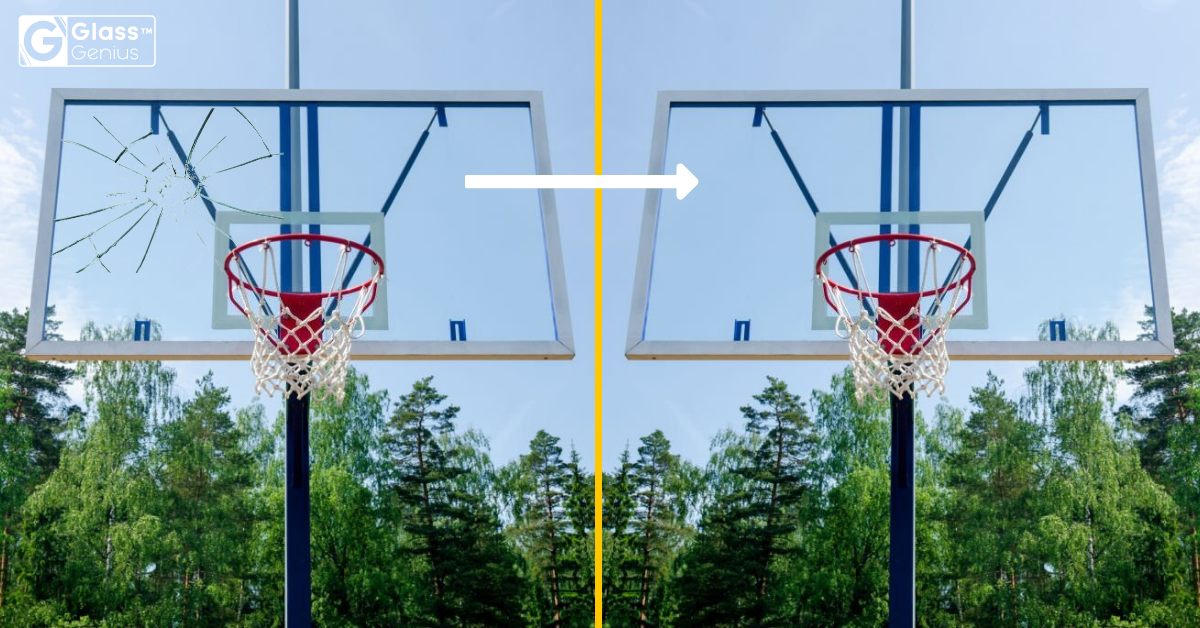
Image Source: www.glassgenius.com
How To Replace Basketball Backboard: Easy Steps
Can you replace a basketball backboard yourself? Yes, you absolutely can replace a basketball backboard yourself with the right tools and a clear understanding of the steps involved. Replacing a basketball backboard is a manageable DIY project for most homeowners. This guide will walk you through everything you need to know to successfully swap out an old, damaged, or worn-out basketball backboard, ensuring your hoop is ready for action again. We’ll cover selecting the right backboard, the tools you’ll need, and a step-by-step process for both removal and installation.
Why Replace a Basketball Backboard?
There are several common reasons why you might need to replace your basketball backboard. The most frequent culprit is damage. Weather, impacts from stray balls, or even just age can cause cracks, breaks, or warping. A broken backboard isn’t just an eyesore; it’s a safety hazard and makes playing the game impossible.
Other reasons include:
- Upgrading: You might want to improve your playing experience with a different type of backboard, such as a thicker acrylic or a professional-grade polycarbonate.
- Aesthetics: An old, faded, or discolored backboard can detract from the look of your yard.
- Functional Issues: Warping or loosening can affect rebound performance and stability.
Types of Basketball Backboards
Before you start, it’s helpful to know the different types of basketball backboards available. This will help you choose a suitable replacement.
- Acrylic: These are popular for their good rebound performance and durability. They are often clear or have a frosted appearance. They are more shatter-resistant than glass but can scratch.
- Polycarbonate: Known for being very strong and shatterproof, polycarbonate backboards offer excellent durability and consistent rebounds. They are often used in mid-range to high-end systems.
- Tempered Glass: These are the professional standard, offering the best rebound action and a clean, crisp sound. However, they are heavier, more expensive, and can break if struck with extreme force or by improper installation.
- Wood: Older or budget systems might feature wooden backboards. These are less durable, prone to weather damage, and offer less consistent rebound. They are rarely chosen for replacements unless for historical authenticity.
- Steel: Primarily used for portable basketball hoops, steel backboards are extremely durable but can rust and are very heavy.
Your current backboard material will likely influence your choice for a replacement, though you can upgrade to a different type.
Tools and Materials You’ll Need
Gathering all your tools and materials before you begin will make the process much smoother.
Essential Tools:
- Wrench Set or Socket Set: To loosen and tighten bolts and nuts. Ensure you have various sizes.
- Adjustable Wrench: For nuts and bolts that might have non-standard sizes.
- Screwdrivers: Both Phillips head and flathead, in case your mounting hardware uses screws.
- Safety Glasses: Crucial for protecting your eyes from debris.
- Work Gloves: To protect your hands.
- Ladder or Step Stool: For reaching the backboard, especially if it’s mounted high. Ensure it’s stable.
- Measuring Tape: To confirm dimensions if you’re unsure of your current backboard size or to check spacing.
- Drill with Drill Bits: May be needed if you need to pre-drill holes or if the new backboard requires different mounting points.
- Caulk Gun and Exterior Sealant (Optional): To seal around the mounting points and prevent water damage.
- Helper: An extra pair of hands is highly recommended, especially for lifting and holding the backboard.
Materials:
- New Basketball Backboard: Ensure it matches the mounting pattern of your existing hoop system or that you have the necessary adapter plates.
- Replacement Mounting Hardware (Optional but Recommended): It’s a good idea to replace bolts, nuts, and washers, especially if the old ones are rusted or stripped. Stainless steel hardware is ideal for outdoor use.
- New Net: While you’re at it, consider replacing the net if it’s worn.
- Cleaning Supplies: Rags, soap, and water for cleaning the pole and rim assembly.
How to Remove Basketball Backboard: Step-by-Step
This is the crucial first step in replacing your basketball backboard. Take your time and ensure safety.
Step 1: Assess the Mounting
Before touching anything, examine how your current backboard is attached. Most backboards are mounted to a rim assembly, which is then attached to the pole.
- Rim and Backboard Integrated: Many systems have the rim directly bolted to the backboard.
- Separate Rim: In some cases, the rim might be attached to a separate mounting bracket that then attaches to the backboard.
Step 2: Secure the Area and Gather Equipment
Ensure the area around the basketball hoop is clear. If you’re using a ladder, make sure it’s placed on a stable, level surface. Have your tools and your helper ready.
Step 3: Loosen the Rim Bolts
The rim is usually attached to the backboard with several bolts that go through the front of the backboard and into the rim or a mounting bracket.
- Have your helper stabilize the rim or backboard.
- Using the appropriate wrench or socket, carefully loosen these bolts. Turn them counter-clockwise.
- Keep the nuts and bolts organized. It’s wise to put them in a small bag or container so they don’t get lost.
Step 4: Remove the Backboard from the Pole/Support
This is where the backboard detaches from the rest of the system. The attachment method varies:
- Direct Pole Mount: Some older or simpler systems might have the backboard directly bolted to a U-shaped bracket attached to the pole.
- Bracket Mount: Most commonly, the backboard is attached to a separate steel or aluminum bracket, which is then secured to the pole.
Locate the bolts that attach the backboard (or its mounting bracket) to the pole or the main support structure.
- Again, have your helper provide support.
- Use your wrenches to loosen these bolts.
- Once the bolts are removed, the backboard and its attached rim (if still connected) should be free.
Step 5: Carefully Lower the Old Backboard
With all bolts removed, carefully lower the old backboard. It might be heavier than you expect, especially if it’s glass or a thicker material.
- Have your helper guide the descent.
- If the rim is still attached, try to keep it as level as possible to avoid undue stress.
Step 6: Clean the Area
Once the old backboard is removed, take the opportunity to clean the mounting bracket, pole, and rim. Remove any dirt, rust, or old sealant. This will ensure a clean surface for the new installation.
Installing a New Backboard: Step-by-Step
Now that the old one is out, it’s time to install the new backboard.
Step 1: Prepare the New Backboard
Unpack your new backboard and inspect it for any damage. If it came with new hardware, set it aside. If not, ensure your old hardware is in good condition or use your new replacement hardware.
Step 2: Attach the Rim to the New Backboard
This step is essentially the reverse of removing the rim from the old backboard.
- Align the rim with the mounting holes on the front of the new backboard.
- Insert the bolts from the front of the backboard through the rim and the backboard.
- Thread the nuts onto the bolts on the back side of the backboard.
- Tighten the bolts securely using your wrenches. Don’t overtighten, especially with glass or acrylic, as this can cause cracking. Ensure the rim is snug and doesn’t wobble.
Step 3: Mount the Backboard Assembly to the Pole/Support
Now you’ll attach the backboard and rim unit to the main support structure.
- Position the backboard assembly against the pole or mounting bracket.
- Align the mounting holes on the backboard’s support bracket with the corresponding holes on the pole or bracket.
- Insert the bolts and nuts.
- Begin tightening them, but don’t fully secure them just yet. Leave them slightly loose so you can make minor adjustments.
Step 4: Ensure Proper Alignment and Leveling
This is a critical step for proper gameplay.
- With the backboard assembly loosely attached, check that the backboard is perfectly level. You can use a spirit level for accuracy.
- Adjust the position of the backboard assembly against the pole until it’s perfectly vertical (and therefore the backboard is horizontal).
- Once you’re satisfied with the alignment and level, have your helper hold it firmly in place.
Step 5: Fully Tighten the Mounting Hardware
With everything aligned, it’s time to secure the mounting hardware.
- Tighten all the bolts and nuts firmly, working in a star pattern if there are multiple bolts, to ensure even pressure.
- Again, avoid overtightening, which can damage the backboard. It should be secure and not move.
Step 6: Install the Net
- Thread the new net onto the rim, following the manufacturer’s instructions. Most nets have loops that hook onto the rim.
Step 7: Final Check and Testing
- Gently shake the backboard and rim assembly to ensure it’s sturdy and securely mounted.
- If you used sealant, apply it around the bolt heads on the back side of the backboard to prevent water ingress.
- Clean up any tools and debris.
Basketball Backboard Mounting Considerations
The way a backboard is mounted is crucial for its stability and longevity. Different systems have different mounting configurations.
- Direct-to-Pole Systems: The backboard attaches directly to a U-shaped bracket that bolts onto the basketball pole.
- Wall Mounts: For in-ground hoops where the pole is set back from a wall or garage, the backboard might mount directly to a wall bracket.
- Portable Hoop Mounts: These often use a more complex system of brackets and support arms that connect the backboard to the main frame of the portable unit.
Always ensure your new backboard is compatible with your existing mounting system or that you have the correct adapter plates. Checking the bolt hole patterns is essential.
Basketball Backboard Repair vs. Replacement
Sometimes, a basketball backboard might not need a full replacement. Minor damage, such as a small crack or loose bolts, might be repairable.
When is Basketball Backboard Repair an Option?
- Loose Bolts: If the backboard is simply loose, tightening the mounting hardware is the easiest “repair.”
- Minor Cracks (Acrylic/Polycarbonate): Small, non-structural cracks in acrylic or polycarbonate backboards can sometimes be repaired with specialized epoxy or acrylic cements. However, this is often a temporary fix, and the structural integrity might still be compromised.
- Warping: Slight warping might be manageable, but significant warping will affect play and is usually best addressed with replacement.
When Replacement is Necessary:
- Large Cracks or Fractures: If the backboard is significantly cracked or fractured, especially in a way that compromises its strength or safety, replacement is necessary.
- Shattered or Broken Backboards: Glass backboards can shatter. Any broken piece requires immediate replacement for safety.
- Severe Weather Damage: Rotting wood, deep corrosion on metal components, or extensive UV damage often means the backboard is beyond repair.
- Incompatibility: If you’re upgrading to a different type of backboard or rim that isn’t compatible with your existing mounting system, a full replacement is required.
The basketball backboard replacement cost can vary significantly depending on the material and brand. A basic acrylic backboard might cost $50-$150, while a high-quality tempered glass or polycarbonate backboard can range from $150 to $500 or more. Hardware and any necessary adapters add to this cost.
Basketball Backboard Hardware: What to Look For
The right basketball backboard hardware is critical for a secure and lasting installation.
- Bolts and Nuts: Stainless steel is highly recommended for outdoor applications to prevent rust and corrosion. Carriage bolts are often used, where the rounded head sits on the front of the backboard, and the nut is on the back.
- Washers: Flat washers help distribute the pressure from the bolt and nut, protecting the backboard material. Spring washers can help prevent the hardware from loosening over time due to vibration.
- Backboard Mounting Brackets: If your new backboard has a different bolt pattern, you might need a new mounting bracket or an adapter plate to connect it to your existing pole or support system.
Always check the specifications of your new backboard to determine the correct size and type of hardware needed. If your old hardware is rusted or damaged, purchasing new, high-quality hardware is a wise investment.
Troubleshooting Common Issues
- Holes don’t align: If the mounting holes on your new backboard don’t match your existing bracket, you may need an adapter plate. These are metal plates with various hole patterns designed to bridge compatibility gaps. Alternatively, you might be able to drill new holes in the bracket (if it’s sturdy enough and won’t compromise its integrity), but an adapter is often a safer bet.
- Backboard wobbles after installation: This usually indicates that the mounting hardware is not tight enough, or the backboard isn’t properly seated against the mounting bracket. Re-tighten all bolts, ensuring they are snug and the backboard is flush.
- Difficulty removing old bolts: If bolts are rusted or seized, apply a penetrating lubricant (like WD-40) and let it sit for a while before trying to loosen them. If they still won’t budge, you may need to carefully cut them with a hacksaw or an angle grinder, taking care not to damage the pole or bracket.
Frequently Asked Questions (FAQ)
Q1: How much does it cost to replace a basketball backboard?
The basketball backboard replacement cost can range from about $50 for a basic acrylic model to $500 or more for a professional-grade tempered glass backboard. Add in the cost of new hardware, which might be $10-$30, for a complete estimate.
Q2: What is the best material for a basketball backboard?
Tempered glass offers the best rebound and a professional feel but is also the most expensive and prone to breaking under extreme impact. Polycarbonate is very durable and offers good rebound, making it a popular choice for durability. Acrylic is a good mid-range option, offering decent rebound and durability at a more accessible price point.
Q3: Do I need a new rim when replacing the backboard?
Not necessarily. If your existing rim is in good condition and compatible with the new backboard’s mounting pattern, you can reuse it. However, it’s often a good idea to replace the net if it’s worn.
Q4: Can I paint an old basketball backboard instead of replacing it?
You can paint some backboards, like wood or older acrylic ones, to refresh their look. However, ensure you use paint suitable for outdoor use and that it won’t affect rebound performance. Acrylic or polycarbonate backboards might be difficult to paint effectively, and cracks or severe damage still require replacement.
Q5: How do I know if my backboard needs replacing?
You need to replace your backboard if it’s cracked, broken, significantly warped, or has extensive corrosion that compromises its structural integrity. Safety is the primary concern; if it feels unstable or has sharp edges due to damage, it’s time for a replacement.
Q6: What is basketball backboard installation?
Basketball backboard installation is the process of securely attaching a new or existing backboard to a basketball hoop’s rim and pole system. This involves bolting the backboard to the rim and then mounting the entire assembly to the main support structure.
Q7: How do I remove a basketball backboard?
To remove a basketball backboard, you first loosen and remove the bolts connecting the rim to the backboard. Then, locate and remove the bolts that attach the backboard (or its mounting bracket) to the pole or support structure. Carefully lower the backboard once all hardware is removed.
Q8: What is basketball backboard repair?
Basketball backboard repair refers to fixing minor damage to a backboard, such as tightening loose hardware, sealing small cracks with adhesive, or making cosmetic touch-ups. It’s an alternative to full replacement for less severe issues.
Replacing a basketball backboard is a rewarding project that can revitalize your basketball hoop. By following these detailed steps and taking the necessary precautions, you can successfully install a new backboard and get back to enjoying the game.