Can I move a basketball hoop filled with water without emptying it? While it is possible to move a very short distance, like a few feet, it is not safe or easy. Moving a water-filled basketball hoop safely almost always needs you to drain the water first. This makes the hoop much lighter and safer to move. It also helps prevent damage to the hoop and yourself. This guide will show you the best way to move your water-filled basketball system.
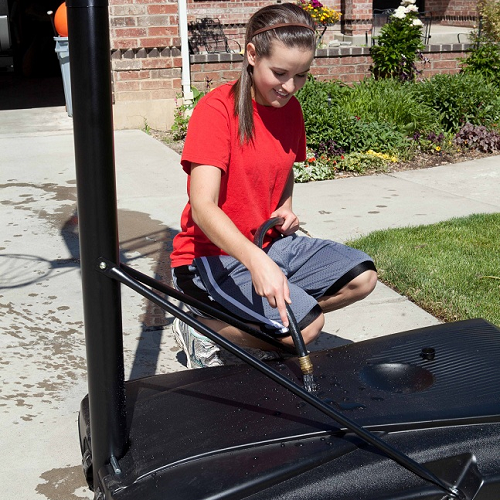
Image Source: marvel-b1-cdn.bc0a.com
Why Empty the Base? It’s About Safety and Ease
Moving a basketball hoop is a big job. A water-filled base can weigh 300 to 500 pounds, or even more. Trying to move something that heavy is very risky. It can cause serious injury to you or others. It can also break your hoop or damage your property.
Think about the risks. You could strain your back. You could drop the hoop. The water could spill out in a big, messy rush. The base could crack. Draining the water fixes all these problems. It makes the hoop much lighter. This makes moving it simple and safe. It protects both you and your basketball goal. How to make portable hoop lighter is a key question here. The answer is simple: get rid of the water. This is the first and most important step.
Getting Ready: Tools and Safety Gear
Before you start to drain or move your hoop, get everything ready. Having the right tools makes the job easier. It also makes it safer. Make a list of what you need. Then, gather these items.
Safety First: Protecting Yourself
Safety should always come first. Moving heavy things, even when lighter, has risks. You need to protect your hands and eyes.
- Work Gloves: Wear strong gloves. These protect your hands from scrapes. They also help you grip things better.
- Safety Glasses: Water can splash. Dirt or debris can fly. Safety glasses protect your eyes from these things.
- Closed-Toe Shoes: Do not wear sandals or open-toe shoes. Wear sturdy shoes. These will protect your feet if something heavy drops.
Tools You Will Need
Having the right tools is key for draining basketball hoop base and moving it. Here is a list of common tools:
- Garden Hose: You will need a hose. This helps direct the water away from your work area.
- Buckets or a Large Bin: These are useful if you want to save the water. Or if you need to drain water into smaller parts.
- Wet/Dry Shop Vacuum (Optional but helpful): This can suck out stubborn water. It is great for getting the last bits.
- Siphon Pump (Optional): This tool uses suction to pull water out. It can be faster than just gravity.
- Dolly or Hand Truck: This is crucial for transporting weighted basketball stand once the water is out. It saves your back.
- Ropes or Bungee Cords: These help secure parts of the hoop. They keep the pole and backboard steady during the move.
- WD-40 or Lubricant: This can help loosen a tight drain cap.
- Pliers or Wrench: Sometimes, a drain cap is very tight. You might need these to turn it.
- Tarp or Cardboard: Lay this down if you are worried about spills. It can protect your grass or patio.
The Draining Process: Emptying the Base
This is the most important step for emptying portable basketball goal water. You need to get almost all the water out. The base often holds 30-50 gallons of water. This is a lot of weight.
Finding the Drain Cap
Most portable basketball hoops have a drain cap. It is usually at the bottom of the base. Look for a large, plastic cap. It might be on the side or underneath. Sometimes, it looks like a screw-on lid. Other times, it might be a simple pull-out plug.
- Check the Front: Often, the cap is near the front, where the pole connects.
- Check the Back: Some hoops have it at the back.
- Look Underneath: It might be on the very bottom.
- Refer to Manual: If you cannot find it, check your hoop’s instruction manual. It will show you exactly where it is.
Opening a Stubborn Drain Cap
Sometimes, the cap is stuck. Dirt, rust, or tight seals can make it hard to open.
- Clean the Area: Wipe away any dirt around the cap.
- Use Lubricant: Spray WD-40 or a similar lubricant around the cap. Let it sit for a few minutes. This can help loosen it.
- Use Tools: If it is a screw-on cap, try pliers or a wrench. Grip it firmly. Turn it counter-clockwise. For a pull-out plug, use pliers to gently wiggle and pull it out. Be careful not to break it.
Methods for Basketball Goal Base Water Removal
Once the cap is open, you can start draining basketball hoop base. There are a few ways to do this.
1. Gravity Drain (The Easiest Way)
This method lets water flow out on its own.
- Lay the Hoop Down: Carefully tilt the hoop onto its side. Make sure the drain hole is at the lowest point. Point the drain hole away from yourself.
- Direct the Water: Place the end of a garden hose into the drain hole. Or just let the water flow freely. Make sure the water runs to a place where it won’t cause issues. This could be a storm drain, a grassy area, or a large bucket.
- Wait: Gravity will do most of the work. This can take a long time. It might take 30 minutes to an hour. For a very full base, it could take even longer.
- Shake and Tilt: When the flow slows, shake the base gently. Tilt it in different ways. This helps move any remaining water towards the drain hole.
2. Siphon Method (Faster for Most)
A siphon uses air pressure to pull water out. This can be quicker than gravity alone. You will need a siphon pump or just a hose.
- Using a Siphon Pump:
- Place one end of the pump’s hose into the water in the base.
- Place the other end lower than the base. Put it into a bucket or drain area.
- Pump the hand pump (if it has one). This will start the water flow.
- Making a Simple Siphon with a Garden Hose:
- Fully fill a garden hose with water. You can do this by putting one end under a tap and letting water flow out the other end.
- Pinch or cap one end of the hose.
- Put the open end deep into the water inside the hoop base.
- Quickly lower the pinched end of the hose below the level of the hoop base. Uncap or un-pinch it. Water should start to flow out. If it doesn’t, try again. Make sure there are no air bubbles in the hose.
3. Shop Vacuum Method (For the Last Bit of Water)
Even after draining, some water always stays inside. This happens because of the base’s shape. A wet/dry shop vacuum is perfect for this.
- Insert Hose: Put the shop vacuum hose into the drain hole. Make sure it goes deep into the base.
- Turn On: Turn on the vacuum. It will suck out the remaining water and any dirt or algae.
- Repeat: You might need to move the hose around inside the base. This helps get all the water. This step is key for how to make portable hoop lighter truly light.
Table: Draining Methods Comparison
| Method | Speed | Effort | Tools Needed | Notes |
|---|---|---|---|---|
| Gravity Drain | Slow | Low | Garden hose (optional) | Best for initial draining, needs patience. |
| Siphon Method | Medium | Medium | Siphon pump OR garden hose, bucket | Faster, good for larger amounts of water. |
| Shop Vacuum Method | Fast (for last bits) | Medium | Wet/dry shop vacuum | Excellent for final drying and removing dirt. |
After Draining: Making Sure It’s Ready to Move
Once most of the water is out, the hoop is much lighter. But there are still a few steps before relocating water-filled basketball system.
Double-Check for Emptiness
Even if it seems empty, a few gallons of water can still be heavy. Tilt the base again. Rock it side to side. Listen for sloshing sounds. If you hear water, try to drain more. Use the shop vacuum if you have one. The goal is to make it as light as possible. This makes moving portable basketball hoop without spilling much easier, because there is no water to spill.
Securing the Pole and Backboard
The pole and backboard can wobble during a move. This can cause damage. They can also hit someone. Secure them before you move the base.
- Lower the Hoop: If your hoop’s height can be changed, lower it to its lowest setting. This makes it more stable. It also reduces its overall height.
- Tie Down the Backboard: Use ropes or bungee cords. Wrap them around the pole and the backboard support arms. Make sure the backboard cannot swing freely.
- Secure the Pole: If the pole comes apart, consider taking it down. Most portable hoops have poles that are fixed. If yours is one piece, just make sure it is steady.
Planning Your Moving Path
Before you lift or push, look at the path you will take. Remove any obstacles.
- Clear the Way: Move toys, garden tools, or furniture. Clear a wide path.
- Check the Surface: Is the path smooth concrete? Is it bumpy grass? Are there steps? Knowing the surface helps you pick the best moving method.
- Measure Doorways: If you need to go through a gate or doorway, measure it. Make sure the hoop will fit. You might need to take off the backboard if it is too wide.
The Moving Process: Safely Relocating Basketball Goal
Now that the base is empty and the hoop is ready, you can start moving. Even empty, a hoop base is still bulky. It can be hard to handle.
Moving It By Hand (Short Distances)
For very short moves on a smooth surface, you might be able to tilt and roll it.
- Tilt and Roll:
- Stand behind the hoop base.
- Tilt the base back on its wheels. Most portable hoops have wheels on one side.
- Once tilted, you can push or pull it.
- Keep the hoop balanced. Go slowly.
- This method is best for flat, hard surfaces. It is not good for grass or uneven ground.
Using a Dolly or Hand Truck (Tips for moving heavy basketball hoop)
This is the best way to move the hoop over longer distances or rough ground. A dolly or hand truck makes transporting weighted basketball stand much easier.
- Types of Dollies:
- Appliance Dolly: These are tall and strong. They have straps to secure items. This is ideal for a hoop base.
- Standard Hand Truck: These work too. You might need to get creative with straps.
- Loading the Hoop onto the Dolly:
- Tilt the hoop base slightly.
- Slide the flat plate of the dolly underneath the base. Try to center the weight.
- Slowly tilt the dolly and the hoop back. Balance the hoop on the dolly’s wheels.
- Use ropes or straps to tie the hoop to the dolly. This stops it from falling off.
- Moving with the Dolly:
- Push the dolly from behind. Do not pull. Pushing gives you more control.
- Walk slowly. Watch for bumps or cracks in the ground.
- If you go up or down a curb, use caution. Lower the dolly slowly. Don’t let it drop. Get help if needed.
- Relocating water-filled basketball system with a dolly is much safer. It takes the strain off your body.
Getting Help: Two is Better Than One
Even when empty, a hoop can be tricky to handle alone.
- Ask a Friend: If possible, ask someone to help. One person can push or pull the dolly. The other person can help guide the hoop. They can also watch for obstacles.
- Lifting Assistance: If you need to lift the base over a step, two people make it much safer. Lift with your legs, not your back.
Moving on Different Surfaces
- Concrete/Pavement: This is the easiest surface. The wheels roll smoothly.
- Grass/Dirt: This can be tough. The small wheels on the hoop base or dolly can sink.
- If possible, lay down plywood planks. This creates a smooth path.
- Push with more force. Be ready for the wheels to get stuck.
- Slopes/Hills: Be extra careful on slopes. The hoop can roll away.
- Move slowly. Keep a firm grip.
- If going down a slope, let gravity help, but control the speed.
- If going up, push hard. Get help if you can.
Re-filling the Base: Getting Ready to Play Again
Once your hoop is in its new spot, you will need to fill the base again. This adds the weight needed for stability.
Where to Fill the Base
- Water Source: Use a garden hose and a nearby outdoor spigot.
- Filling Hole: The same hole you used to drain the water is usually used for filling. It might be a different hole sometimes. Check your manual.
How to Fill the Base
- Insert Hose: Put the end of your garden hose into the filling hole.
- Turn on Water: Turn the water on slowly at first. This stops a big splash.
- Fill Slowly: Let the water fill the base. Watch for air bubbles coming out of the hole. This means water is going in.
- Do Not Overfill: Most bases have a “fill line.” Do not fill past this line. Overfilling can make the base crack. It can also make it spill when you move it slightly.
- Replace Cap: Once full, screw the cap back on tightly. Make sure it is sealed. This stops leaks.
How Much Water to Use
The amount of water needed depends on your hoop’s base size.
- Small bases: 20-30 gallons (about 160-250 pounds)
- Medium bases: 30-40 gallons (about 250-330 pounds)
- Large bases: 40-50+ gallons (about 330-415+ pounds)
Always check your hoop’s manual for the exact recommended fill amount.
Keeping Your Hoop in Good Shape: Maintenance
Once moved, proper care helps your hoop last.
- Check Water Level: Over time, some water can evaporate. Check the level every few months. Top it off if needed.
- Clean the Base: If you drain the water often, clean the inside. Dirt or algae can build up. This keeps the water clean and the base strong.
- Check for Leaks: Look at the base for cracks or leaks. Fix them right away. A leaking base means a less stable hoop.
- Protect from Freezing: If you live where it gets cold, drain the water in winter. Water expands when it freezes. This can crack the plastic base. Many people use sand or a mix of water and antifreeze (like RV antifreeze, which is non-toxic) for winter stability if they don’t want to drain it fully. Check your manual for what your brand recommends.
Frequently Asked Questions (FAQ)
Q1: Can I use sand instead of water to weigh down the base?
A1: Yes, many people use sand. Sand is heavier than water. It makes the base even more stable. However, sand is very hard to remove once it is in. It can make future moves much harder. It also adds more weight, making transporting weighted basketball stand much harder without draining first.
Q2: How long does it take to drain a hoop base?
A2: It depends on the size of the base and the method you use. Gravity draining can take 30 minutes to over an hour. Using a siphon or shop vacuum speeds it up.
Q3: My drain cap is stuck. What should I do?
A3: First, clean around the cap. Then, spray some WD-40 or similar lubricant on it. Let it soak for a few minutes. Try pliers or a wrench for screw-on caps. Be gentle to avoid breaking the cap.
Q4: Do I have to remove the backboard to move the hoop?
A4: Not usually. Lowering the hoop to its lowest setting is often enough. But if you have very narrow gates or doorways, removing the backboard might be necessary. Check the hoop’s width against your doorway’s width.
Q5: What if I spill some water when moving the hoop?
A5: If you drain it well, spills should be small or none. If a small amount spills, it’s usually not a big deal. For large spills, clean them up quickly. Use a wet/dry vacuum or towels. A tarp under the base during draining can help prevent big messes.
Q6: What is the best way to clean the inside of the base?
A6: After draining, use a garden hose to rinse the inside. You can add a little bleach solution (very diluted) or specialized cleaners for plastic tanks. Rinse it many times after using chemicals. Make sure to get all the cleaner out before re-filling with fresh water.
Moving a basketball hoop filled with water might seem like a hard job. But by draining the base first, you make it safe and simple. Take your time, use the right tools, and ask for help if you need it. Soon, your hoop will be ready for many more games in its new spot.